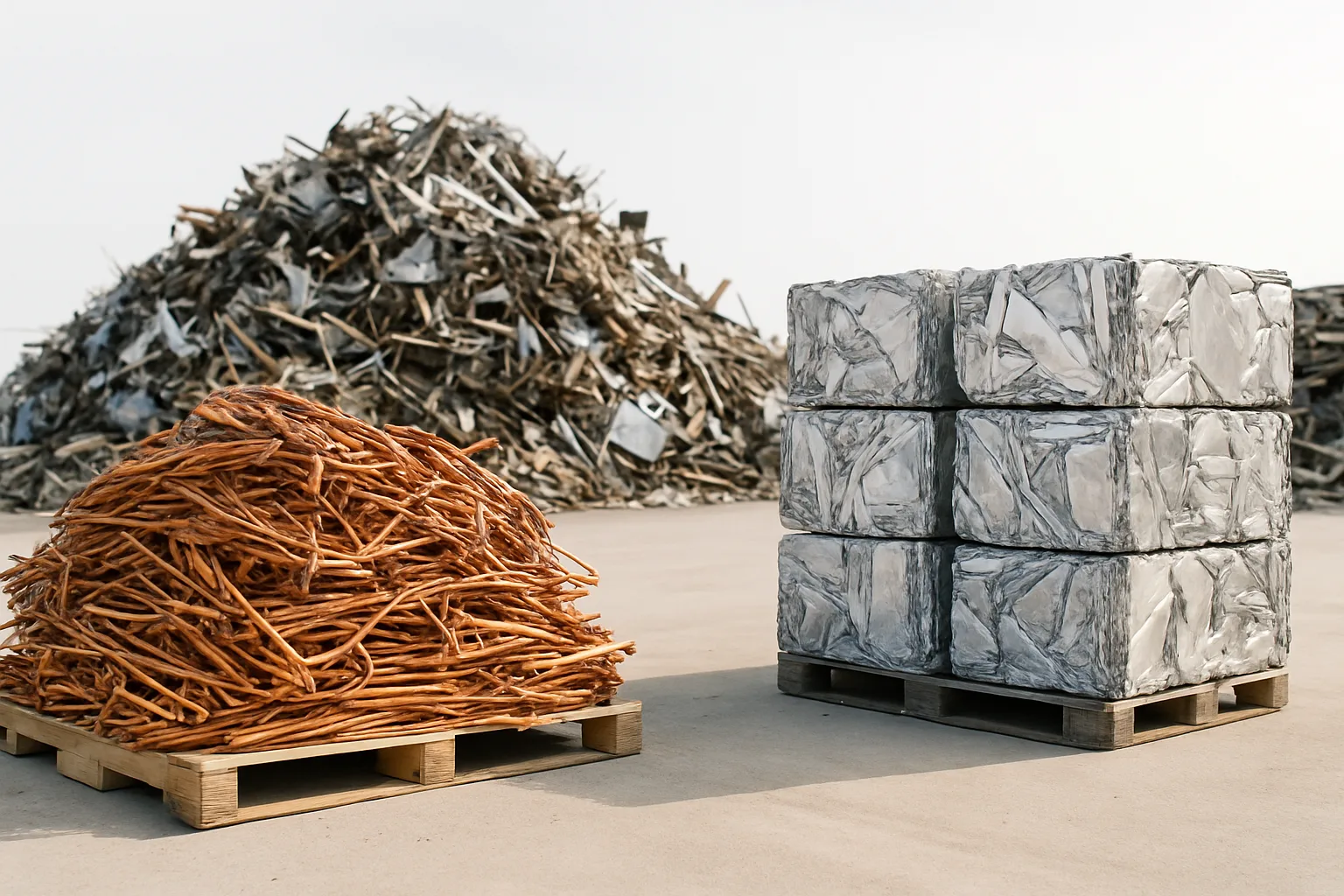
What's Actually Worth Money in Your Junk Pile? The Most Valuable Scrap Metals from Winnipeg Residential Pick Ups
Most people have no idea what's sitting in their garage, basement, or backyard is worth real money. That old chest freezer. The broken window AC unit. The pile of copper wire from last summer's reno. The junked car rusting beside the fence. During residential appliance pick up Winnipeg runs, our crews consistently find metals that recyclers actively compete to buy — metals that never should have gone to landfill in the first place.
This isn't about squeezing nickels out of a bag of tin cans. We're talking about non-ferrous metals, catalytic converters, copper-wound motors, and aluminum grades that hold real market value. If you're clearing out a property, doing a farm cleanup, or finally dealing with that scrap car on the side of the house, knowing what you have changes the conversation entirely.
Here's what our crews find most often — and what makes it worth calling for a pick up rather than renting a bin and burying the good stuff.
Copper: The Most Consistently Valuable Metal in Any Residential Pick Up
Copper is the crown jewel of residential scrap. It shows up in more places than most homeowners realize — and the grades vary significantly in value. Bare bright copper wire (stripped, clean, no insulation) commands the highest price. Number 1 copper (clean pipe, bus bar, wire clippings) comes in close behind. Number 2 copper covers dirty pipe, romex wire, and mixed electrical.
During a typical renovation cleanout or full-house appliance pick up in Winnipeg, it's common to find:
- Copper plumbing pipe from basement renos or bathroom gut jobs
- Romex and BX electrical wire pulled during panel upgrades
- Copper coil from AC units and refrigerators — often several pounds per unit
- Copper-wound motors from appliances and shop equipment
- Copper transformer cores from older shop equipment or hobby electronics
A single fridge can yield a half-pound to a pound of copper coil. A full appliance cleanout — fridge, freezer, washer, AC unit — can add up fast. The key is separating copper properly before hand-off. Mixed loads get graded down. Clean copper gets top dollar. Platforms like SMASH Recycling — connecting you with trusted Canadian recyclers exist precisely because clean, documented loads attract more competitive bids than mystery mixed scrap.
Don't strip wire if you're not sure how — some recyclers prefer it intact, others want it stripped. Ask before you assume. The wrong prep can actually cost you money.
Aluminum: Everywhere You Look, and More Valuable Than Most People Think
Aluminum is one of the highest-volume metals recovered from residential and farm scrap pick up runs across Manitoba. It's lightweight, which makes people underestimate how much they have — but aluminum prices are respectable, and volume adds up quickly.
The most common aluminum finds during residential pick ups include:
- Old aluminum windows and doors — a full window frame can weigh 8–12 lbs
- Aluminum siding from older homes being re-sided
- Rims (cast aluminum wheels) — each rim can weigh 15–25 lbs depending on size
- Aluminum ladders and scaffolding from trades or farm equipment
- Aluminum extruded pieces from storm doors, screen frames, and patio furniture
- Sheet aluminum from garage roofing and outbuilding cladding — especially common on farm scrap pick up Winnipeg-area calls
Aluminum grades also vary. Cast aluminum (motors, wheels) trades differently than extruded aluminum (window frames, storm doors) and sheet aluminum. Mixing them together during a cleanout can mean getting graded at the lowest denominator. If you're doing a large cleanout and want to schedule your scrap metal pick up in Winnipeg, separating your materials before the truck arrives gives you better leverage on pricing.
Catalytic Converters and Auto Parts: The High-Value Surprise in Scrap Vehicles
Catalytic converters are the single most valuable component recovered from scrap vehicles — and they're also the most regulated. A catalytic converter from a late-model truck or SUV can be worth more than the rest of the vehicle combined, depending on the precious metal content (platinum, palladium, rhodium).
During scrap car pick up in Winnipeg, the metals that hold real value beyond the body steel include:
- Catalytic converters (cats) — value varies significantly by vehicle make, model, and year
- Aluminum engine blocks — increasingly common in vehicles made after 2000
- Copper wiring harnesses — modern vehicles contain significant copper by weight
- Stainless steel exhausts — value is modest but real
- Lead-acid batteries — recyclers pay for cores, and these should never go to landfill
One critical point for any scrap vehicle in Manitoba: you cannot hand over a vehicle for scrap without proper documentation. The Manitoba Scrap Metal Act requires a clear title or Transfer on Death (TOD) document. This is not optional. No reputable recycler or pick-up service will accept a vehicle without it. If you're unsure what documentation you need, read scrap metal pick up guides for Winnipeg before you call — it saves time and avoids delays on pick-up day.
If your vehicle has a catalytic converter still attached, know its value before you agree to any price. Auctions through a scrap metal auction platform like SMASH let recyclers bid competitively on loads that include documented cats — which means better price discovery than a single phone call to a single buyer.
Brass, Stainless Steel, and Other Non-Ferrous Finds Worth Separating
Copper and aluminum get all the attention, but experienced scrappers know that brass and stainless steel deserve their own pile. These metals show up in residential pick ups far more often than people expect — especially in older Winnipeg homes and farm properties.
Brass is the heavier, yellowish metal found in:
- Plumbing fittings, valves, and gate valves
- Door hardware — hinges, handles, and deadbolts
- Electrical connectors and terminal blocks
- Old radiator cores (a mix of brass and copper)
Stainless steel shows up in:
- Old appliance bodies (some ranges, dishwashers)
- Commercial kitchen equipment from businesses or restaurants
- Farm dairy equipment and processing surfaces
Stainless steel doesn't stick to a magnet — that's the quick field test. Regular steel sticks. Stainless doesn't. This matters because stainless gets priced differently and should stay separate from your ferrous pile. Mixing it in costs you money. The magnet test takes two seconds and can meaningfully change what a recycler offers on your load.
For a deeper look at separating and identifying your metals before a pick up, scrap metal pick up in Winnipeg and Manitoba services can advise you on the phone before the truck rolls — just ask when you book.
Why Competitive Bidding Changes What You Get Paid for Scrap Loads
Here's something most people never consider: the price you get for scrap depends almost entirely on whether buyers are competing for it. Call one recycler, get one number. That number might be fair — or it might be the lowest they thought you'd accept. You have no way to know.
This is the problem SMASH was built to solve. On a scrap metal auction platform like SMASH, documented loads — appliances with photos, vehicles with VIN tracking and title documentation, bulk non-ferrous sorted by grade — attract multiple vetted buyers. Competition reveals the actual market price. More buyers means better price discovery. That's not a sales pitch; that's how commodity markets work.
For larger residential cleanouts, farm scrap pick up near Winnipeg, or multi-vehicle lots, the difference between one buyer and six buyers bidding can be significant. SMASH charges no subscription fees and only earns when the seller does. That alignment matters when you're trying to clear property and maximize what you walk away with.
The old way — one call, one guess, one take-it-or-leave-it offer — doesn't serve sellers. Competition does.
How to Prepare Your Scrap for Pick Up and Get the Most Value
Preparation is the part most people skip — and it's where money gets left on the table. A sorted, documented load gets treated differently than a random pile of mixed metal. Here's what to do before pick-up day:
- Separate ferrous from non-ferrous. Use a magnet. Steel and iron stick. Copper, aluminum, brass, and stainless don't. Keep them in separate piles.
- Sort aluminum by grade. Keep cast, extruded, and sheet separate if you can.
- Pull copper components. Coils, wire, pipe — separate from other materials. Don't mix with steel.
- Have your vehicle documentation ready. Title or TOD document for any scrap vehicle. No exceptions under the Manitoba Scrap Metal Act.
- Take photos. Especially for larger loads. Photos help buyers assess value and speed up the pick-up process.
- Move items to an accessible location. Outside, in a garage, or at the edge of your driveway. We do not enter private homes — items must be accessible for loading.
Free pick up is available for qualifying loads in Winnipeg and surrounding areas. Qualifying typically means bulk scrap, multiple appliances, commercial volumes of non-ferrous, farm equipment cleanouts, or multiple vehicles. Single small items may incur a pickup fee — for those, dropping off at a local yard is usually the better option.
If you're ready to clear out, the process is straightforward. Call 1-855-SMASH-74 or visit scrap-metal-pick-up.ca to book. Our Winnipeg scrap metal services cover the city and the surrounding region — and we make sure every pick up is Manitoba Scrap Metal Act compliant from documentation to final processing.
Don't let valuable metal sit in a pile another year. Get it picked up, documented, and into the hands of buyers who are competing for it.
Frequently Asked Questions
Q: Is appliance pick up in Winnipeg actually free?
Free pick up applies to qualifying loads — typically multiple appliances, bulk scrap, or commercial volumes. A single appliance may have a small pick-up fee depending on location and load size. For single items, dropping off at a local recycling yard is often the faster and cheaper option. Call ahead to confirm whether your load qualifies.
Q: What appliances contain the most scrap metal value?
Refrigerators, freezers, and air conditioners tend to hold the most value because they contain copper coil, aluminum components, and compressor motors. Washing machines and dryers are largely steel but often contain copper-wound motors worth separating. Gas ranges may have brass fittings and stainless components worth pulling before scrap.
Q: Do I need paperwork to scrap a car in Winnipeg?
Yes — this is required under the Manitoba Scrap Metal Act. You must provide a clear title or a Transfer on Death (TOD) document for any scrap vehicle. No reputable pick-up service will accept a vehicle without proper documentation. If you've lost your title, contact Manitoba Public Insurance (MPI) before booking your scrap car pick up.
Q: How do I know if my scrap metal is worth auctioning versus just scrapping it?
Larger loads with documented non-ferrous content — especially copper, aluminum, or catalytic converters — tend to perform better through a competitive auction process. Platforms like SMASH allow vetted buyers to bid against each other on documented loads, which can result in better price discovery than a single yard quote. For small loads, direct drop-off is usually simpler.
Q: What areas near Winnipeg do you service for scrap metal pick up?
We service Winnipeg and surrounding Manitoba communities including Selkirk, Steinbach, Portage la Prairie, Stonewall, and rural areas in between. Farm scrap pick up and large residential cleanouts across the broader Manitoba region are welcome — contact us to confirm your location and load details before booking.
Prices for all scrap metals fluctuate with global commodity markets. The grades and values described in this article reflect general market conditions as of July 2026. Always confirm current pricing directly with your recycler or through a competitive bidding platform before finalizing any transaction.
Follow SMASH on LinkedIn for scrap metal market updates, industry news, and recycling insights across North America.