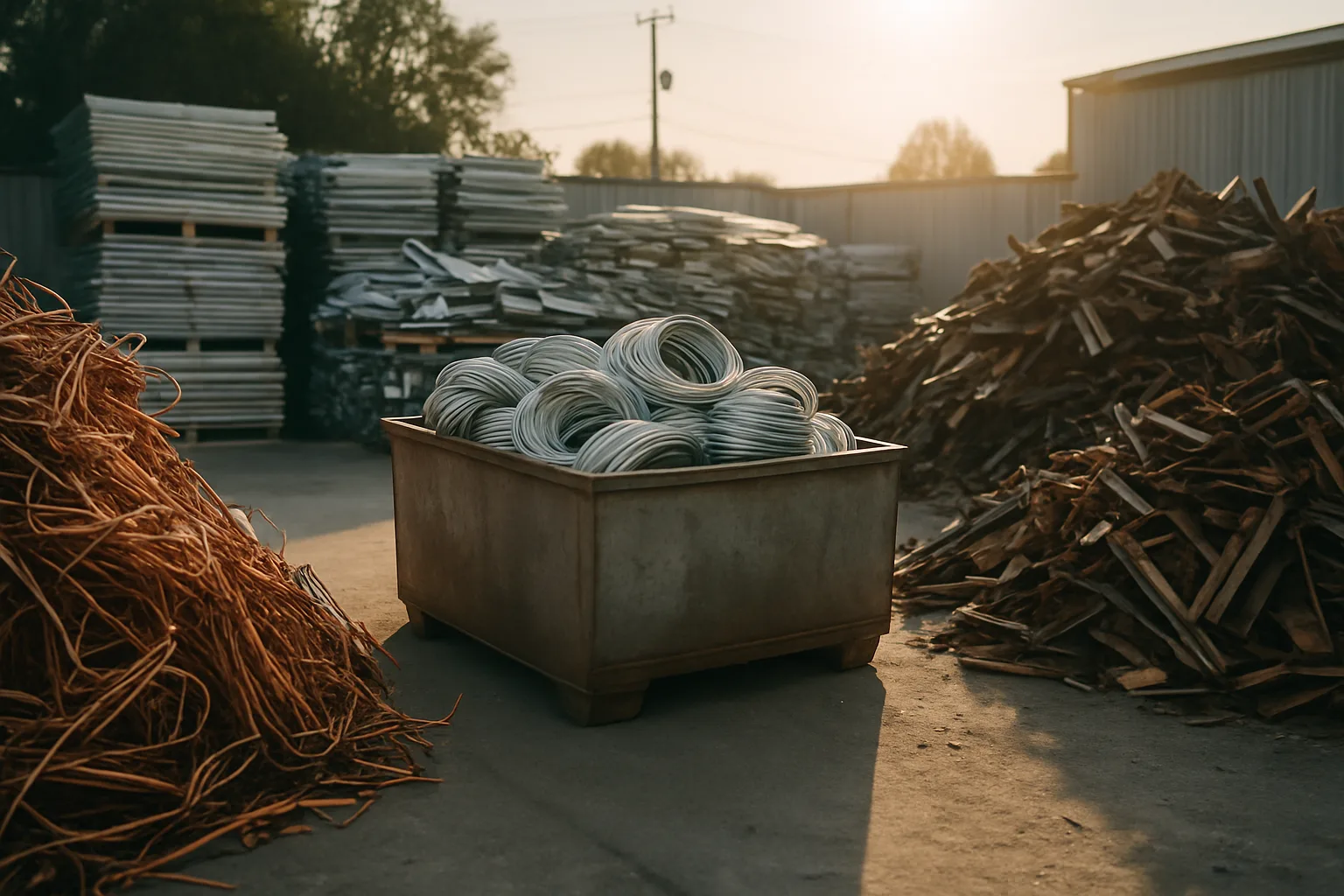
Manitoba sends millions of kilograms of recoverable metal to landfill every year — and most of it didn't need to go there. Old farm equipment, junked vehicles, broken appliances, scrap steel left over from a reno job. Every one of those items had value. Every one of them could have been recycled. Instead, they're taking up space in a hole in the ground that costs everyone money to maintain.
This isn't a feel-good environmental pitch. It's a practical problem with a practical fix. If you're sitting on scrap metal — on a farm, in a yard, in a garage — getting it picked up and recycled is faster and easier than most people think. And for qualifying loads, it costs you nothing.
Here's what you need to know about how scrap metal pick up in Winnipeg and Manitoba actually reduces landfill pressure — and why it matters more than you might expect.
Why Metal Ends Up in Manitoba Landfills in the First Place
The honest answer: friction. Hauling a dead combine header or a pile of old pipe to a recycler takes time, a truck, and sometimes a trailer. For a lot of people — especially on rural properties — it's easier to push it to the back of the yard and deal with it later. Later turns into years. Years turn into decades. And the pile grows.
Urban properties aren't immune either. In Winnipeg, old appliances, scrap vehicles, and leftover construction metal regularly end up curbside or in bins headed straight to landfill — not because people don't care, but because they don't know there's a better option. The recycling path isn't obvious. Drop-off locations have weight limits and hours. Hauling takes equipment most homeowners don't own.
That's the gap that free pick up services are designed to close. Remove the friction, and the metal moves. It's that simple.
What Actually Gets Recycled — And What Happens to It
Scrap metal recycling isn't a vague concept. When a load of steel, aluminum, copper, or cast iron gets picked up and delivered to a yard, it goes through a real process: sorting, shredding or baling, and eventually melting down into raw material that manufacturers use again. Steel from a scrapped farm implement can end up in rebar. Aluminum from an old truck cab can become automotive parts. The loop closes.
Here's what commonly comes out of farm and residential cleanouts in Manitoba:
- Ferrous metals — structural steel, farm equipment, vehicle frames, old tin roofing, pipes
- Non-ferrous metals — copper wiring and plumbing, aluminum siding and window frames, brass fittings
- Scrap vehicles — cars, trucks, ATVs, farm trucks, trailers
- Appliances — refrigerators, washers, dryers, water heaters, stoves
- Farm-specific scrap — augers, cultivator shanks, header sections, bins, old tanks
None of that belongs in a landfill. All of it has recyclable value. The difference between it ending up in the ground versus back in the supply chain is usually just access — knowing who to call and what the process looks like.
Platforms like SMASH Recycling — connecting you with trusted Canadian recyclers help make that connection easier, whether you're selling a single load or clearing out years of accumulated scrap from a farm or commercial property.
Farm Scrap Pick Up in Winnipeg and Rural Manitoba — Why Farms Are a Special Case
Farm scrap pick up in Winnipeg and the surrounding rural regions is a category of its own. Farms accumulate metal at a scale that most urban properties never reach. A single quarter section might have decades of equipment parts, old tractors, fuel tanks, bin rings, and steel infrastructure sitting in the treeline or behind the shop. The weight and volume involved often makes conventional drop-off completely impractical.
That's exactly the situation where farm scrap pick up makes the biggest environmental difference. When a crew comes out with the right equipment and hauls a full load — or multiple loads — away in one shot, it keeps tons of recoverable metal out of the ground. It also cleans up property that often has legitimate safety concerns: old fuel tanks, rusted equipment with sharp edges, and buried scrap that interferes with drainage.
For farms, qualifying loads for free pick up typically include:
- Multiple pieces of farm equipment (even non-running)
- Large steel accumulations — bins, tanks, structural components
- Multiple scrap vehicles — farm trucks, tractors, combines
- Commercial-volume copper or non-ferrous material
- Full property cleanouts with bulk steel
Single small items may involve a pickup fee or are better suited to drop-off. Items must be accessible — outside, in a yard, or in a garage. We don't enter private homes.
Scrap Car Pick Up in Winnipeg: The Documentation Nobody Talks About
Scrap vehicles are one of the biggest contributors to recoverable metal sitting in Manitoba yards instead of being recycled. A lot of that comes down to one thing: people don't know what paperwork they need, so the car sits.
Under the Manitoba Scrap Metal Act, scrapping a vehicle requires proper documentation — either a title in your name or a Transfer on Death (TOD) document. This isn't optional. It's the law, and it's there to prevent theft and fraud in the scrap vehicle industry. Any legitimate Winnipeg scrap metal services provider will ask for it — and you should be skeptical of anyone who doesn't.
Here's what the documentation process looks like in practice:
- Locate the vehicle title in your name (or the TOD document if applicable)
- Confirm the VIN on the title matches the vehicle
- Contact a compliant scrap car pick up provider
- The provider records the documentation at pickup — this protects you legally
- The vehicle is transported to a licensed facility and processed
Don't have the title? Manitoba Public Insurance (MPI) can help with replacement documentation in many cases. It's worth sorting out before you book. Scrap car pick up in Winnipeg for qualifying vehicles is free — but only when the paperwork is in order.
SMASH works with Manitoba Scrap Metal Act compliant operators, so when you use the platform to connect with a recycler, you know compliance isn't an afterthought.
How Free Metal Pick Up Service Reduces Pressure on Winnipeg Landfills
The math here is straightforward. Every tonne of steel that gets recycled is a tonne that doesn't need to be mined from raw ore — and a tonne that doesn't end up in a landfill cell. Manitoba's landfills are finite. Operating them costs money. Filling them with material that has active market value is a waste in every sense of the word.
Free pick up service lowers the barrier to recycling dramatically. When there's no cost to hand off your scrap — and in many cases, qualifying loads can actually generate cash — the economic incentive flips. Instead of paying to dump, or letting scrap accumulate, you make the call and the material moves.
For context on why this matters at scale: steel is one of the most recycled materials on earth, and recycling it uses significantly less energy than producing it from raw iron ore. Copper and aluminum follow a similar pattern. Every appliance, every vehicle, every pile of farm steel that enters the recycling chain instead of a landfill represents real energy savings and real resource conservation — not just in Manitoba, but across the entire supply chain.
If you're ready to move your scrap, schedule your scrap metal pick up in Winnipeg and find out if your load qualifies for free pick up.
What to Expect When You Book a Pick Up
First-timers often have the same questions: How do I know what qualifies? Do I need to sort anything? What happens on the day of pick up?
Here's a realistic rundown of how the process typically works:
- Contact and qualify: Call or submit your details online. Describe what you have — volume, type of metal, location. You'll find out quickly if your load qualifies for free pick up or if there's a fee involved.
- Prep your scrap: Get it accessible. Outside, in a driveway, or pulled to the edge of a yard. Items must be reachable without entering the home.
- Documentation for vehicles: Have your title or TOD ready if you're scrapping a car or truck. Non-negotiable under Manitoba law.
- Pick up day: A crew arrives with the right equipment to load and haul your material. Ferrous and non-ferrous may be sorted on-site.
- Settlement: For loads with significant value, you may receive payment based on current scrap metal prices. Prices fluctuate with the market — check current rates at the time of booking.
Appliances, bulk steel, and farm scrap are all handled routinely. If you've been putting it off because the process seemed complicated, it isn't. Want more guidance before you book? Read scrap metal pick up guides for Winnipeg and get familiar with the process before you make the call.
Frequently Asked Questions
Q: Is farm scrap pick up in Winnipeg and surrounding areas always free?
Free pick up applies to qualifying loads — typically bulk farm scrap, multiple vehicles, commercial volumes of non-ferrous metal, or large accumulations of steel. Single items or small loads may involve a pick up fee. Drop-off at a licensed facility is an alternative for smaller quantities. Contact us to confirm whether your load qualifies before booking.
Q: What documents do I need for scrap car pick up in Winnipeg?
Under the Manitoba Scrap Metal Act, you need either the vehicle title in your name or a valid Transfer on Death (TOD) document. The VIN on the paperwork must match the vehicle being picked up. If you've lost your title, Manitoba Public Insurance (MPI) can assist with replacement documentation in many situations.
Q: How do scrap metal prices today affect what I get paid for my load?
Scrap metal prices fluctuate based on global commodity markets and local yard conditions. What steel, copper, or aluminum fetches on any given day can be different from what it was last week. Always confirm current rates at the time of booking. Prices referenced in any guide or blog post are for general context only — check current market rates directly.
Q: Can I get appliance pick up in Winnipeg through this service?
Yes. Appliances like refrigerators, washers, dryers, water heaters, and stoves are regularly picked up as part of qualifying loads. Appliances must be accessible outside the home or in a garage — we don't enter private residences. For a single appliance, a pick up fee may apply; larger appliance quantities or combined loads are more likely to qualify for free pick up.
Q: Does this service cover areas outside Winnipeg, or only within city limits?
The service covers Winnipeg and surrounding Manitoba communities. Rural farm pick ups are a core part of what we do — distance and access are factored into whether a load qualifies. Contact us with your location and a description of your scrap, and we'll let you know what's possible.
If you've got scrap sitting on your property — a dead car, a pile of farm steel, an old appliance or three — it doesn't need to end up in a landfill. Free scrap metal pick up for qualifying loads is available in Winnipeg and across Manitoba, and the process is straightforward when you work with a compliant operator. Call 1-855-SMASH-74 or visit scrap-metal-pick-up.ca to find out if your load qualifies. Manitoba Scrap Metal Act compliant from the first call to the last load.
Follow SMASH on LinkedIn for ongoing scrap metal market updates, industry news, and practical guides for recyclers and sellers across North America.