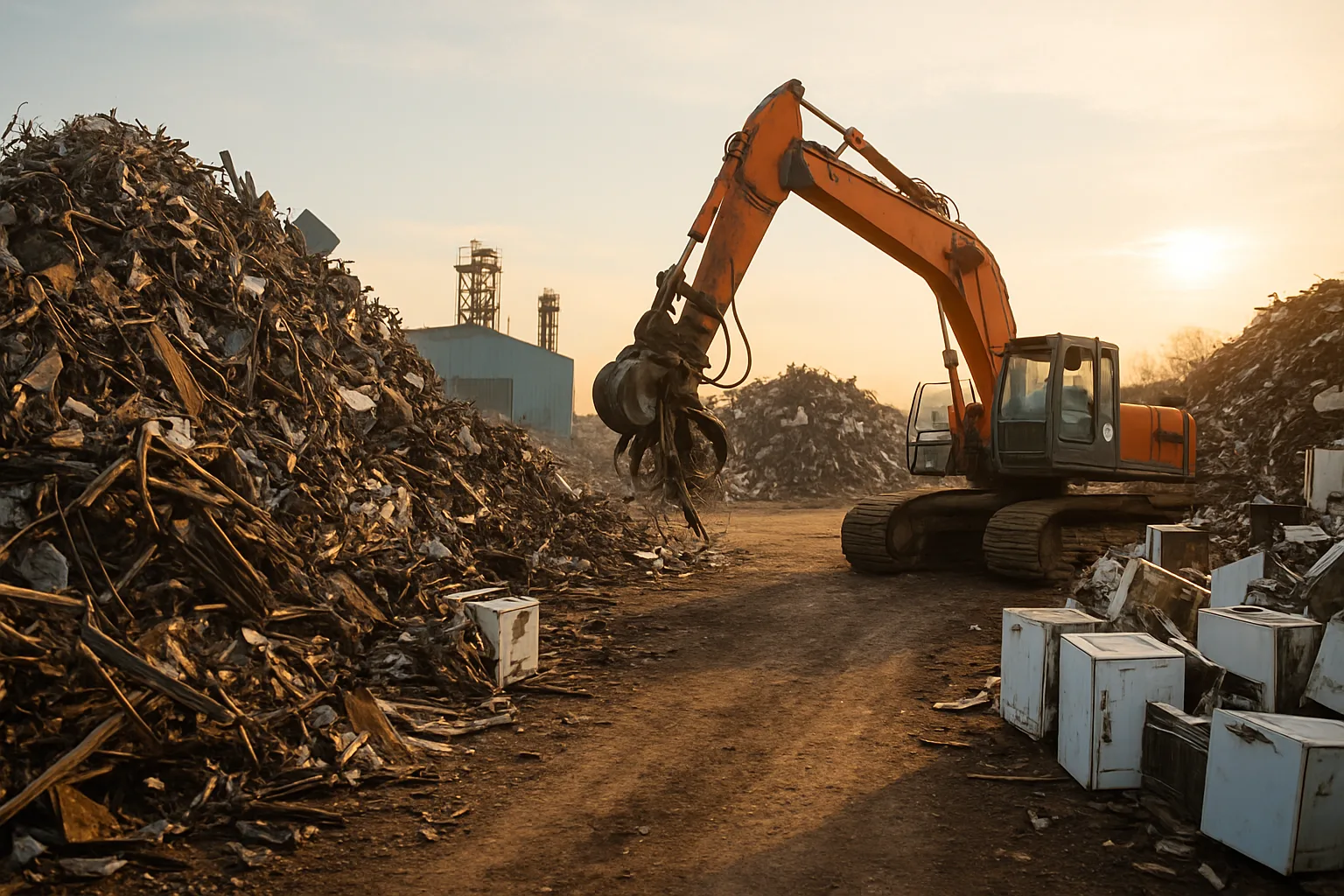
Why Winnipeg Winters Create the Busiest Scrap Season You've Never Heard Of
Most people assume scrap metal slows down when the temperature drops. They're wrong. In Winnipeg, winter is when the calls start coming in fast — appliances that finally gave out over the holidays, farm equipment that sat frozen all fall, and scrap cars that haven't moved since October. Cold weather doesn't kill scrap demand. It builds it up like pressure behind a dam, and when it breaks, yards get buried.
This is a case study in how that seasonal surge plays out — and how property owners, farmers, and contractors can get ahead of it instead of scrambling when the thaw hits.
What Actually Happens to Scrap Demand in a Winnipeg Winter
Winnipeg winters are brutal and long. Temperatures regularly sit below -20°C for weeks. That kind of cold does real damage — to appliances running overtime in unheated garages, to older vehicles that refuse to start, to farm equipment left in fields or outbuildings that contract and crack under freeze-thaw cycles.
Here's what that looks like in practice:
- Appliances: Chest freezers, furnaces, water heaters, and washing machines pushed to their limits during cold months tend to fail in winter or right at the start of spring. People replace them fast — they have to — and then they're stuck with a dead unit taking up space in a garage or basement.
- Scrap cars: Vehicles that don't start in November often don't get dealt with until spring. But savvy owners start making calls in February or March when they know the snow is almost done. That window is short and competitive.
- Farm equipment: Farmers use the slower winter months to sort through decades of accumulated iron — old cultivators, grain augers, broken implements. It stacks up. By late winter, there are serious volumes ready to move.
- Construction and renovation debris: Contractors who wrapped up jobs in the fall often left scrap on-site or in staging areas. Once the ground firms up, it's time to clear it out.
The result is a concentrated burst of scrap metal pick up in Winnipeg and Manitoba demand that runs from roughly late February through April. If you're sitting on scrap, that's actually the best time to move — provided you're ready.
Appliance Pick Up Winnipeg: The Winter Replacement Cycle
Nobody plans to replace a fridge or furnace in January. But that's exactly when it happens. A chest freezer in an unheated garage finally dies. A water heater gives out mid-storm. A washing machine that's been running rough all fall quits completely during a cold snap. These aren't scheduled replacements — they're emergencies. And once the new unit arrives, the old one needs to go.
That's where appliance pick up Winnipeg services become critical. Hauling a dead chest freezer or washing machine out of a basement or garage in February is not a one-person job. And most people don't have a way to transport a 200-pound appliance to a recycling facility. Free pick up for qualifying loads removes that barrier entirely.
What qualifies? Generally:
- Multiple appliances at the same location (stoves, fridges, washers, dryers, freezers)
- Bulk quantities from a renovation, cleanout, or commercial property
- Appliances set outside or in a garage where our team can access them without entering the home
One important note: we do not enter private homes. Items need to be outside, in a garage, or in an accessible outbuilding. If you can get it to the door, we can take it from there. For a single appliance that can't be moved outside, drop-off at a local yard may be the better option — or a small pickup fee may apply.
Platforms like SMASH make it easy to connect with vetted buyers and recyclers who can handle the volume and documentation that comes with large appliance cleanouts. When you're moving a dozen units from a rental property or a commercial building, having organized documentation and a competitive pickup process matters.
Farm Scrap Pick Up in Manitoba: The Winter Sorting Season
Farmers across Manitoba use winter downtime strategically. When you're not seeding or harvesting, you're fixing, planning — and clearing out. Decades of old iron accumulate on farm properties: broken disc harrows, bent cultivator shanks, worn-out auger flights, rusted-out grain bins, old truck frames, and equipment that's been retired but never removed.
Winter is when farmers walk the yard and finally decide what goes. By the time roads are solid enough to handle a heavy haul truck in late March or April, they've got a clear idea of what they're moving. Smart operators start making calls in January or February to get on the schedule early — because farm scrap pick up near Winnipeg and across rural Manitoba fills up fast when the ground firms.
Farm cleanouts can involve significant volumes of ferrous and non-ferrous metal. A single farmyard cleanout might include:
- Multiple pieces of retired iron equipment (cultivators, discers, seeders)
- Aluminum grain bin sheets and structural steel
- Copper from old electrical panels and irrigation systems
- End-of-life vehicles and machinery with catalytic converters
- Steel fencing, posts, and outbuilding materials
When catalytic converters are involved — whether from retired farm trucks, tractors with cats, or old equipment — documentation matters. SMASH runs a legitimate catalytic converter auction process that provides transparent pricing and proper chain of custody. That's not just good practice — in Manitoba, it's increasingly the standard the industry expects.
For large farm scrap volumes, schedule your scrap metal pick up in Winnipeg or rural Manitoba early. Haul routes and truck availability in spring are first-come, first-served.
Scrap Car Pick Up in Winnipeg: Why Winter Vehicles Are a Spring Opportunity
Every winter, hundreds of vehicles across Winnipeg get parked — sometimes permanently. An engine that doesn't turn over in -30°C, a transmission that's been slipping for months, a frame that's finally rusted through. Owners make a mental note: deal with it in spring. Then spring arrives, and the rush is on.
Scrap car pick up in Winnipeg follows a predictable seasonal pattern. Call volumes spike in March and April as owners finally act on vehicles they've been putting off. If you're one of them, getting organized now — before the thaw — puts you ahead of the lineup.
Here's what you need to have ready before we pick up a scrap vehicle in Manitoba:
- Title (vehicle ownership): You need to show proof that you own the vehicle. No title, no pickup — that's Manitoba law under the Manitoba Scrap Metal Act.
- Transfer on Death (TOD) documentation: If the registered owner is deceased, a TOD or estate documentation is required.
- Accessible vehicle: The vehicle needs to be in a driveway, yard, or accessible property — not buried under four feet of snow with no way to get a truck in.
The Manitoba Scrap Metal Act compliance isn't optional. It protects sellers, buyers, and the integrity of the recycling chain. Any legitimate scrap vehicle pickup in Winnipeg — including ours — follows it without exception.
If your scrap vehicle has a catalytic converter still attached, that's additional value. SMASH's catalytic converter auction process ensures you're getting competitive market pricing on cats, not a low-ball estimate from a single buyer. More buyers means better price discovery — that's the whole point.
How SMASH Connects Sellers to Competitive Buyers During Peak Season
The old way of selling scrap in Manitoba? One phone call. One buyer. One price — take it or leave it. No visibility into whether that number is fair. No competition pushing it higher.
SMASH changes that. Whether you're moving a load of non-ferrous from a farm cleanout, auctioning catalytic converters from end-of-life vehicles, or documenting a bulk appliance removal for a commercial property — SMASH puts vetted buyers in competition for your material. That competition can help reveal the actual market. You're not guessing. You're not hoping the one buyer you called is being straight with you.
Features that matter during the winter scrap surge:
- Inventory tool: Document loads with photos, weights, and serial tracking before they move — critical for large mixed loads.
- VIN lookup: For scrap vehicles, VIN documentation ties the vehicle to its title, keeping your paperwork clean.
- Photo documentation: Buyers bid with confidence when they can see what they're buying. Better documentation, better bids.
- Auto-invoicing: When a load sells, paperwork generates automatically — no chasing buyers for invoices.
- No subscription fees: SMASH only wins when you win. If your load doesn't sell, you pay nothing.
For Winnipeg yards and Manitoba sellers moving serious volume in the spring surge, list your scrap for pickup on SMASH Recycling and see how competition changes the conversation.
For everything else — the homeowner with four old appliances in the garage, the farmer with a yard full of iron, the property manager clearing out a commercial site — read scrap metal pick up guides for Winnipeg to understand what qualifies, what to prepare, and how to get picked up fast.
The winter scrap season in Winnipeg is real, it's predictable, and it rewards the people who get organized early. If you've got scrap sitting — whether it's a dead appliance, an end-of-life vehicle, or a full farmyard of iron — don't wait for May. Start the process now. Free pick up is available for qualifying loads in Winnipeg and Manitoba. We're Manitoba Scrap Metal Act compliant on every vehicle pickup, no exceptions. Call 1-855-SMASH-74 or visit Winnipeg scrap metal services to get on the schedule before the spring rush hits full speed.
Frequently Asked Questions
Q: Is appliance pick up in Winnipeg really free?
Free pick up is available for qualifying loads — meaning multiple appliances, bulk quantities, or commercial volumes. A single appliance may incur a pickup fee, or drop-off at a local yard might be a better option. Items must be accessible outside or in a garage; we do not enter private homes.
Q: What do I need to have ready for scrap car pick up in Winnipeg?
You need the vehicle title (proof of ownership) before we can pick up any scrap car in Manitoba. If the registered owner is deceased, Transfer on Death or estate documentation is required. This is mandatory under the Manitoba Scrap Metal Act — no exceptions.
Q: Why does scrap metal pick up in Manitoba get busy in spring?
Winter creates a backlog. Appliances fail, vehicles get parked permanently, and farm equipment gets sorted during slower months. When roads firm up and snow clears, all of that material moves at once — creating a concentrated surge in demand from late February through April. Getting on the schedule early means faster pickup and less waiting.
Q: Can I get farm scrap metal removal near Winnipeg for a large rural cleanout?
Yes. Large farm cleanouts — multiple pieces of equipment, vehicles, non-ferrous material — typically qualify for free pick up. Contact us early in the season, as truck availability for rural Manitoba routes fills up quickly in spring. The more detail you can provide about the load volume and access, the faster we can schedule.
Q: What happens to catalytic converters from scrap vehicles?
Catalytic converters from scrap cars and farm trucks are documented, tracked, and sold through SMASH's catalytic converter auction process. This gives sellers transparent, competitive pricing instead of a single low-ball estimate. It also ensures proper chain of custody documentation — which matters for compliance and for maximizing what you recover from end-of-life vehicles.
---Stay current on scrap metal market trends and recycling industry updates by following SMASH on LinkedIn — useful intel for anyone moving metal in Winnipeg and across Manitoba.