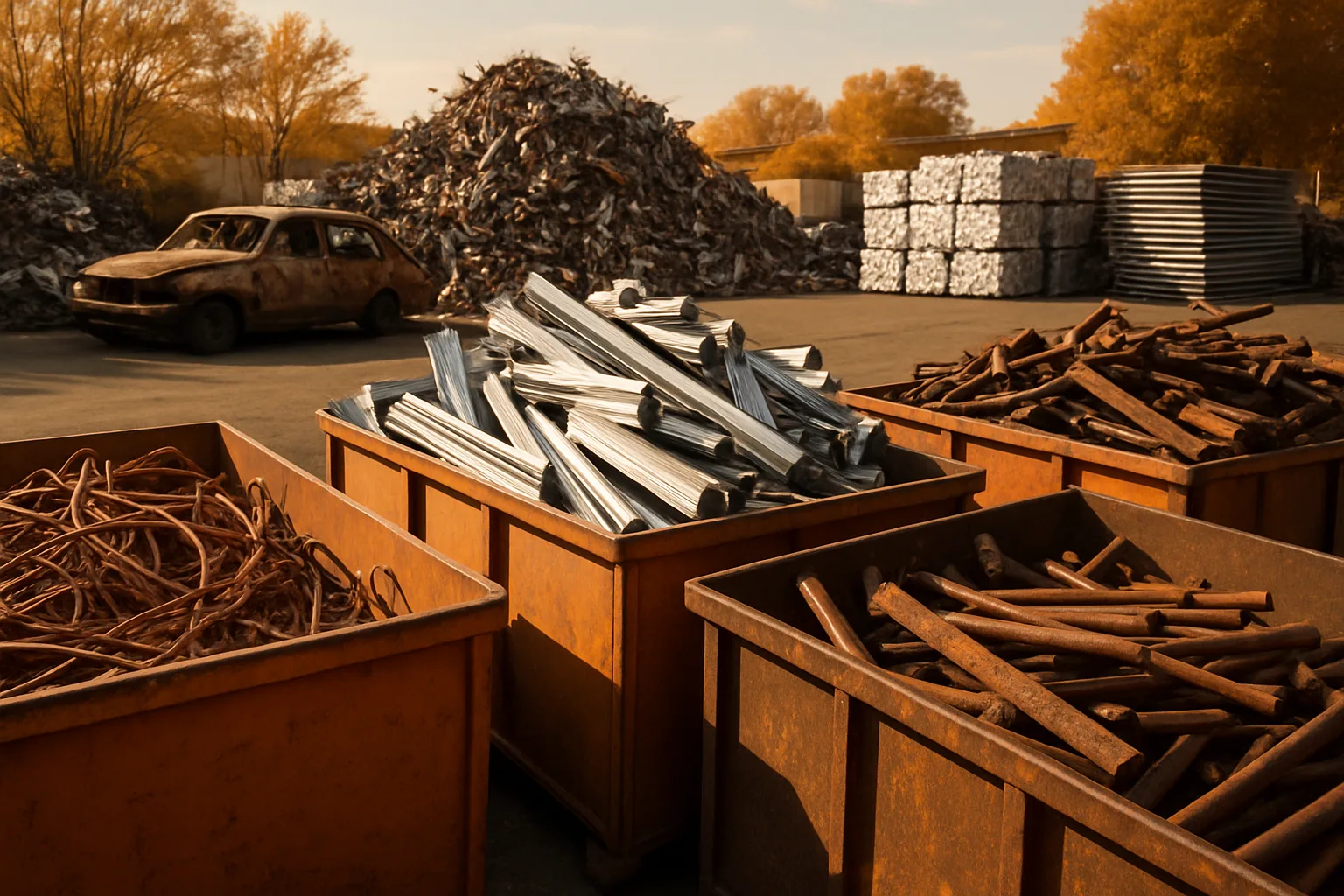
Every Abandoned Vehicle and Rusty Appliance Has a Second Life — Here's How Winnipeg Is Proving It
Manitoba sends millions of kilograms of recoverable metal to landfill every year. Not because people want to waste it. Because getting rid of it feels complicated. A dead car sitting in a back lane. A chest freezer rusting in a garage. A pile of farm equipment that's been "too much trouble" to move for a decade. That material has real value — and it doesn't have to end up buried.
This is a look at how scrap vehicle pick up in Winnipeg and broader metal recycling programs are quietly keeping thousands of tonnes out of Manitoba landfills — and what happens when you make the process genuinely easy for the people who have the scrap.
Why Metal Ends Up in Landfill in the First Place
It's not ignorance. Most people know scrap metal is recyclable. The barrier is friction. Who do you call? Will they actually show up? Do you need paperwork for the old car? Is there a cost? When the answer to any of those questions is unclear, the path of least resistance is doing nothing — and eventually, the scrap gets treated as garbage.
In Manitoba, this plays out across every type of property. Urban homeowners in Winnipeg deal with old appliances after a renovation or a tenant move-out. Rural landowners sit on generations of farm equipment, old vehicles, and steel structures they don't know how to move. Contractors finish a job and have a bin full of steel and copper offcuts they'd rather recycle than pay tipping fees on. The material is there. The logistics aren't.
That's the real landfill problem. It's not that recycling is impossible — it's that the pick-up experience has historically been inconsistent, opaque, and sometimes not worth the hassle. Fix the logistics, and the metal moves.
What a Scrap Vehicle Pick Up in Winnipeg Actually Looks Like in 2026
Walk through a real scenario. A homeowner in the North End has a 2003 Dodge pickup that hasn't run in four years. It's been sitting behind the garage, collecting parking tickets and neighbour complaints. The owner knows it has some value — but doesn't know how much, doesn't know who to call, and has heard horror stories about shady tow operations.
Under Manitoba's Manitoba Scrap Metal Act, scrapping a vehicle requires proof of ownership — a clear title or a Transfer on Death (TOD) document. That's non-negotiable, and for good reason. It protects the owner and ensures the vehicle isn't stolen property entering the recycling chain. Once that documentation is in order, a compliant pick-up service schedules a time, removes the vehicle at no charge (for qualifying loads), and the car gets properly processed — fluids drained, hazardous materials handled, steel and non-ferrous metals separated and recycled.
The environmental outcome is significant. A mid-size vehicle contains roughly 900 to 1,100 kilograms of recyclable steel, plus aluminum, copper wiring, and a catalytic converter with recoverable platinum group metals. None of that needs to be landfilled. Platforms like Canadian scrap metal pick up and recycling marketplace SMASH connect scrap vehicle sellers with vetted buyers who compete for that material — which means better price discovery and documented, transparent transactions.
For the homeowner, the friction is gone. For the environment, a tonne of steel stays out of a landfill. That's the transaction that matters.
Farm Scrap Metal Removal: The Bigger Opportunity Nobody Talks About
If urban scrap vehicle pick up is the visible part of the recycling story in Winnipeg, farm scrap metal removal is the quiet giant. Manitoba has thousands of active and semi-active farms, and most of them have decades of accumulated metal — grain augers, disk harrows, old combines, corrugated steel bins, and vehicles that predate the internet. That material sits because farms are busy, the equipment is remote, and one call to a single buyer who offers a flat rate doesn't feel worth it.
The math changes when you get competitive. A bulk farm cleanup — multiple vehicles, structural steel, and non-ferrous like copper wiring and aluminum — can represent serious tonnage. More tonnage means a qualifying load for free pick up. More buyers competing for the material means better pricing. Documented inventory means the transaction holds up if questions arise later.
SMASH was built for exactly this kind of situation. Rather than one phone call to one buyer with one number, sellers can document their load — photos, weights, material types — and let vetted buyers compete. More buyers means better price discovery. That's not a slogan. That's how markets work.
Farm cleanups also have a compounding environmental benefit. Removing old equipment from fields and fence lines prevents slow leaching of oils, battery acid, and other contaminants into Manitoba's soil and groundwater. Getting that steel to a recycler isn't just good economics. It's basic environmental stewardship.
Appliances, Renovation Scrap, and the Qualifying Load Question
Not every scrap metal situation involves a vehicle or a farm. Plenty of Winnipeg homeowners and contractors are dealing with smaller-scale material — a fridge and stove after a kitchen reno, a pile of copper pipe from a plumbing job, a stack of aluminum window frames from a replacement project.
Here's where it's worth being clear: free pick up applies to qualifying loads. That means bulk quantities — multiple appliances, commercial volumes of non-ferrous, trade quantities of copper and aluminum, or large-scale cleanouts. A single appliance or one small item may involve a pick-up fee, and in those cases, drop-off at a local recycling facility is often the better option.
But for contractors and property managers running real volume — that's a different story. A bathroom gut job generates copper pipe, cast iron tubs, steel studs, and aluminum. A garage cleanout might yield an old chest freezer, a water heater, a lawnmower, and a stack of steel shelving. That's a qualifying load. That's free pick up territory. And that material, properly recycled, stays out of a bin heading to Brady Road.
- Qualifying loads typically include: multiple scrap vehicles, bulk farm equipment, commercial volumes of copper or non-ferrous, full garage or shop cleanouts, renovation scrap from trade projects
- May involve a fee: single appliance pick up, single small items, loads that require significant labour to access
- Always required for vehicles: clear title or TOD documentation per the Manitoba Scrap Metal Act
- Items must be accessible: outside, in a garage, or otherwise reachable — we do not enter private homes
If you're not sure whether your load qualifies, the answer is to ask — not to assume it doesn't and toss the material. For guidance on what works in your situation, scrap metal pick up in Winnipeg and Manitoba can help you figure out next steps without the guesswork.
What Happens to the Metal After Pick Up — The Recycling Chain
People often assume recycling is a feel-good gesture that doesn't change much. The metal supply chain says otherwise. Steel recycled from scrap requires roughly 75% less energy to produce than steel made from raw ore. Recycled aluminum uses about 95% less energy than primary aluminum production. These aren't small differences — they're the kind of numbers that move the needle on industrial carbon emissions at scale.
When a scrap vehicle or bulk metal load leaves your property in Winnipeg, it moves into a processing chain. At a recycler, vehicles are depolluted — fluids, refrigerants, and batteries are removed and handled properly. The hulk is then shredded, and ferrous and non-ferrous metals are separated magnetically and by density. Catalytic converters go to specialized refiners who recover platinum, palladium, and rhodium. The steel bales go to mills. The aluminum and copper go to foundries and wire manufacturers.
Nothing in a properly processed scrap vehicle needs to go to landfill. The recycling rate for end-of-life vehicles is one of the highest of any product category — well above 90% by weight when the process is done right. That's not an accident. It's the result of a supply chain that works when the pick-up end of it works too.
Platforms like SMASH add transparency to the front end of that chain. When a seller documents their load — photos, VIN lookups on vehicles, serial tracking on high-value items — buyers have more confidence in what they're bidding on. More confidence means more competition. More competition means the seller sees a better return, and the material moves through the system instead of sitting in a back lane for another five years.
If you want to understand more about how the process works from pick-up to sale, read scrap metal pick up guides for Winnipeg for practical breakdowns of what to expect at each stage.
How to Get Started with Scrap Metal Pick Up in Winnipeg
The process is straightforward. Here's how it works from your end:
- Inventory what you have. Vehicles, appliances, structural steel, copper, aluminum — take stock of the material and its approximate quantity.
- Gather documentation for any vehicles. You need a clear title or Transfer on Death document. No exceptions under the Manitoba Scrap Metal Act.
- Make sure the material is accessible. Items need to be outside, in a garage, or otherwise reachable. Pick-up teams do not enter private homes.
- Contact a compliant pick-up service. Use our Winnipeg scrap metal services page to get started with a pick-up request.
- Schedule and confirm. For qualifying loads, pick up is free. You'll get a scheduled time, and the crew handles the heavy lifting.
For sellers who want to go further and get competitive pricing on larger loads — bulk non-ferrous, multiple vehicles, farm equipment — schedule your scrap metal pick up in Winnipeg and explore how the SMASH platform connects you with vetted buyers who compete for your material. No subscriptions. No locked-in pricing. Just a market that works the way a market should.
Manitoba's landfills don't need your steel. Your back lane doesn't need that dead car. If your load qualifies, pick up is free, the process is compliant, and the environmental math is clear. Call 1-855-SMASH-74 or visit scrap-metal-pick-up.ca to get started.
Frequently Asked Questions
Q: Is scrap vehicle pick up in Winnipeg really free?
Free pick up applies to qualifying loads — typically bulk scrap, multiple vehicles, farm cleanouts, or commercial volumes of non-ferrous metal. A single vehicle may qualify on its own if it has recyclable value. Contact us to confirm whether your situation qualifies before assuming there's a cost.
Q: What documents do I need to scrap a car in Winnipeg?
Under the Manitoba Scrap Metal Act, scrapping a vehicle requires a clear title or a Transfer on Death (TOD) document proving you own the vehicle. This is non-negotiable and protects both you and the buyer. If you've lost your title, Manitoba Public Insurance (MPI) can help you obtain a replacement before the pick up is scheduled.
Q: What happens to my old appliances after pick up?
Appliances are processed at licensed recycling facilities. Refrigerants are recovered from fridges and freezers, compressors are removed, and the steel and aluminum shell is shredded and sent to mills. Virtually no part of a major appliance needs to go to landfill when handled by a compliant recycler.
Q: How do I know I'm getting a fair price for my scrap metal?
The best way to ensure fair pricing is competition. Platforms like SMASH let vetted buyers compete for your load, which means the price reflects the actual market rather than whatever one buyer decides to offer. Documenting your load with photos and accurate weights also gives buyers more confidence, which typically improves the offers you receive.
Q: Can I scrap metal from a farm property in rural Manitoba?
Yes. Farm scrap metal removal — including vehicles, equipment, and structural steel — is one of the best use cases for bulk pick up. Large farm cleanouts often qualify as bulk loads, making free pick up eligible. Vehicles still require title documentation per the Manitoba Scrap Metal Act, even on private rural property.
Stay current on scrap metal market conditions, pricing trends, and recycling industry updates by following SMASH on LinkedIn: follow SMASH on LinkedIn.