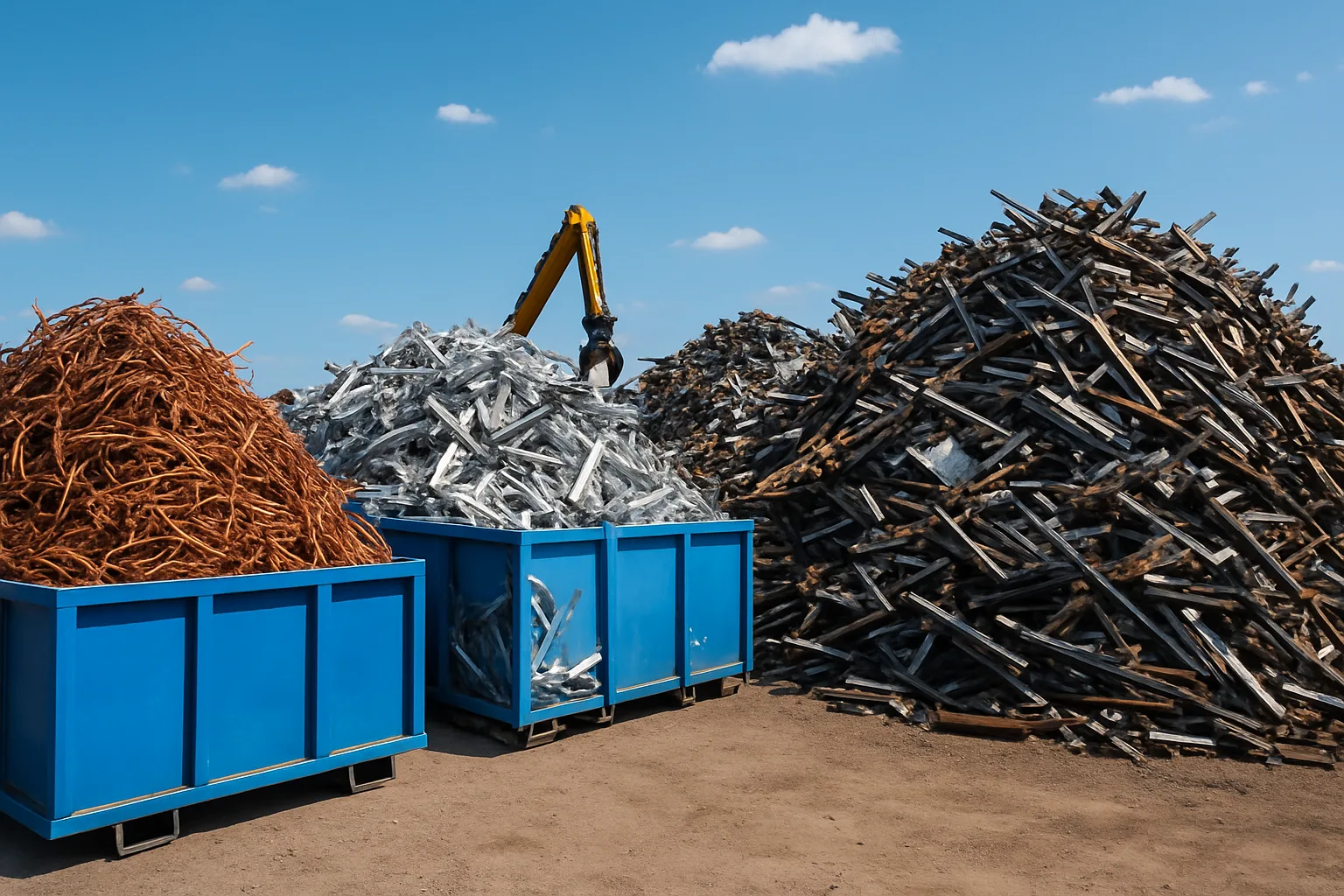
Renovation season in Winnipeg is brutal on your property — and your patience. You gut a bathroom, replace a deck, or tear out an old furnace room, and suddenly you're staring at a pile of copper pipe, old steel beams, aluminum window frames, and busted appliances that nobody wants to haul away. Here's what most homeowners and contractors get wrong: that pile has real value. And getting rid of it doesn't have to mean renting a bin and paying by the pound.
This guide breaks down what renovation debris is actually worth, how scrap metal pick up in Winnipeg and Manitoba works for construction loads, and how to avoid leaving money on the table when you clear your job site.
What Counts as Scrap Metal in a Renovation Debris Pile?
Not everything in your demo pile is junk. Contractors and recyclers look at renovation debris very differently than homeowners do. Once you know what's valuable, you stop throwing it in the bin and start sorting it.
Here's what typically comes out of a Winnipeg renovation and carries scrap value:
- Copper pipe and fittings — pulled from plumbing upgrades or older homes with original copper supply lines. Even short sections add up fast by weight.
- Aluminum window frames and door frames — common in older multi-unit buildings and commercial renos. Light but consistent value per pound.
- Steel and iron beams, brackets, and fasteners — structural steel from additions, basement renos, or deck replacements.
- Old electrical wire (copper core) — stripped or unstripped. Copper wire is one of the most consistently valuable scrap items.
- Cast iron radiators and boilers — heavy and awkward, but cast iron prices per ton are real. Manitoba's older housing stock has a lot of these.
- Appliances — furnaces, water heaters, stoves, and washers from kitchen or utility renos all qualify as metal recycling.
- Galvanized steel conduit and ductwork — HVAC replacements and electrical upgrades generate consistent volume.
- Old rebar and mesh — from concrete work, basement underpinning, or slab pours.
Drywall, lumber, insulation, and roofing shingles are not scrap metal — those go to a different waste stream. But anything with significant metal content belongs in the recyclable category, not the landfill.
Free Scrap Pick Up in Winnipeg: What Qualifies and What Doesn't
Let's be straight about this. Free pick up for qualifying loads is real — but not every pile of renovation debris qualifies. Volume matters. A single aluminum window frame or one length of copper pipe isn't enough to justify a pick-up run. But a full bathroom gut, a basement mechanical room cleanout, or a multi-trade commercial reno? That's a different story.
Qualifying loads for free scrap pick up in Winnipeg typically include:
- Multiple appliances in a single pick-up (furnaces, water heaters, stoves, fridges)
- Significant copper or non-ferrous metal volumes — think full plumbing gut, electrical rewires, or HVAC changeouts
- Commercial or multi-unit renovation scrap in bulk
- Farm or property cleanouts with large mixed metal volume
- Multiple scrap vehicles combined with construction scrap
Smaller single-item loads may involve a pickup fee, or you may be better off dropping directly at a scrap yard. When in doubt, call ahead and describe what you've got. If your load has real volume and accessible placement — outside, in a garage, or staged for loading — there's a good chance it qualifies. We do not enter private homes. Everything needs to be staged and accessible before pick-up day.
Renovation Scrap vs. Cash for Scrap Cars Winnipeg: Combining Loads Is Smart
Here's where things get interesting. If you're already scheduling a renovation scrap pick-up, it's worth asking whether you have an old vehicle sitting on the property at the same time. Combining a construction scrap load with a cash for scrap cars Winnipeg removal is efficient for everyone — one trip, one invoice, one less thing on your plate.
Scrap vehicle removal alongside renovation debris is more common than you'd think. A garage renovation often means clearing out the vehicle that's been dead in the bay for three years. A property sale triggers both a house cleanout and a scrap car removal. These combined loads often qualify more easily for free pick-up than either item would on its own.
Important: scrap vehicle removal in Manitoba is governed by the Manitoba Scrap Metal Act. You need either the title or Transfer on Death (TOD) documentation for any vehicle being scrapped. No exceptions, no workarounds. This protects you legally and keeps the process clean. If your paperwork is ready to go, Winnipeg scrap metal services can handle vehicle removal as part of the same job.
Platforms like Canadian scrap metal pick up and recycling marketplace — SMASH — connect sellers with vetted buyers who bid competitively on loads. That means better price discovery than calling one yard and taking whatever number they give you. More buyers, more competition, better outcome for the seller.
How to Sort Renovation Debris to Maximize Scrap Value
Mixing your scrap costs you money. A bucket of clean copper stripped of fittings and insulation pays significantly more per pound than copper mixed with steel or plastic. Sorting takes time, but it's one of the highest-return activities on a renovation job site if you're dealing with volume.
Here's a practical sorting approach for Winnipeg contractors and homeowners:
- Separate non-ferrous from ferrous. Copper, aluminum, brass, and stainless steel go in one pile. Steel, iron, and galvanized metal go in another. The magnet test is fast — if it sticks, it's ferrous.
- Keep copper grades separate. Bright bare copper wire, copper pipe, and mixed copper each price differently. Don't combine them.
- Pull aluminum frames before bundling steel. Aluminum window frames thrown in with steel beams get downgraded. Keep them separate.
- Strip wire if you have the time. Insulated copper wire pays less than bare copper. If the volume justifies it, stripping adds value — but don't do it in areas where burning is involved.
- Stage for access. Pile sorted loads where a truck can reach them. Alley access, open garage bays, or clear driveway staging. A loader can't pull scrap from inside a locked basement.
Even rough sorting — non-ferrous in one pile, ferrous in another — makes a meaningful difference at weigh-in. SMASH's inventory documentation tools help sellers record what they have before the load moves, which gives buyers confidence and can improve competitive bids on larger loads.
Scrap Metal Recycling Canada: Why Winnipeg Contractors Are Switching to Auction-Style Platforms
The old model for scrap metal recycling Canada-wide was simple: call your regular yard, accept the number they quote, and move on. That still works for small loads. But for significant renovation scrap — multiple tons of mixed metals, non-ferrous volume, or scrap vehicles combined with construction debris — that single-call model leaves money behind.
The reason is straightforward: one buyer doesn't compete with themselves. When you get one quote from one yard, that's the ceiling. When multiple vetted buyers bid on your load — which is how SMASH works — competition sets the price, not one person's margin.
This matters more for contractors and property managers than it does for one-time homeowners, because volume multiplies the difference. A price discovery gap of even a few cents per pound across a ton of copper is real money. For renovation loads that move regularly — think property management companies doing annual suite upgrades, or general contractors clearing multiple job sites — switching to a competitive platform is a straightforward business decision.
You can read scrap metal pick up guides for Winnipeg to get a better sense of how the process works for different load types, from single appliances to full commercial cleanouts.
What to Expect on Pick-Up Day: Renovation Scrap Edition
Knowing what happens when the truck shows up helps avoid frustrating delays and missed pick-ups. Here's the realistic sequence for a renovation debris pick-up in Winnipeg:
Before the truck arrives:
- All scrap is staged and accessible — outside, in an open garage, or in a clearly accessible driveway area
- Non-metal debris (drywall, wood, insulation) is separated out
- If a scrap vehicle is part of the load, title or TOD documentation is ready
- Large or heavy items (cast iron radiators, steel beams) are noted in advance so the right equipment shows up
At pick-up:
- Load is weighed and documented — photo documentation and packing lists apply to commercial loads
- Sorted loads get graded accurately; mixed loads get blended pricing
- BOL (Bill of Lading) or equivalent paperwork is generated for the load
- Auto-invoicing handles the transaction clearly, so there's no ambiguity on what you're being paid for
Straightforward process. No surprises if you prep correctly. The biggest delays come from inaccessible staging and missing vehicle documentation — both entirely avoidable.
If you're ready to clear your renovation debris, schedule your scrap metal pick up in Winnipeg and describe your load in detail when you call. The more accurate your description, the smoother the pick-up goes.
Frequently Asked Questions
Q: Does renovation debris qualify for free scrap metal pick up in Winnipeg?
It depends on volume and metal content. Bulk loads — multiple appliances, significant copper or aluminum volume, or large mixed metal quantities from a major renovation — typically qualify for free pick up. Single-item loads or low-weight debris may involve a fee or a drop-off recommendation. Describe your load accurately when you call and you'll get a straight answer.
Q: Can I get cash for scrap cars in Winnipeg at the same time as a renovation pick-up?
Yes, and it often makes the combined load qualify more easily for free pick-up. If you have a scrap vehicle on the property alongside renovation debris, you can schedule both in a single trip. You'll need title or Transfer on Death (TOD) documentation for the vehicle — Manitoba Scrap Metal Act compliance is required for all vehicle removals, no exceptions.
Q: What renovation materials are NOT accepted as scrap metal?
Drywall, lumber, roofing shingles, fiberglass insulation, and concrete are not scrap metal and won't be accepted as part of a metal pick-up. Strip those materials out before staging your load. Anything with significant metal content — pipe, wire, framing, appliances, fixtures — belongs in the scrap pile.
Q: How do I find scrap metal pickup near me with current prices in Winnipeg?
Scrap metal prices fluctuate based on commodity markets, so always confirm current rates before scheduling. Platforms like SMASH give you competitive price discovery by connecting your load to multiple vetted buyers rather than locking you into a single yard's quote. For current pricing and pick-up availability in Winnipeg, call 1-855-SMASH-74 or visit scrap-metal-pick-up.ca.
Q: Do I need to be home for the scrap metal pick-up?
Someone needs to be available to confirm load details and sign documentation, especially for scrap vehicle removals requiring title verification. For renovation scrap loads where all items are pre-staged and accessible, arrangements can sometimes be made in advance — but confirm this when you book. We do not enter private homes; all material must be staged in an accessible outdoor area or open garage.
Renovation scrap doesn't have to go to a landfill bin at your expense. If the volume is there and the load is staged properly, free pick-up for qualifying loads is available across Winnipeg and Manitoba — Manitoba Scrap Metal Act compliant, no-hassle, and documented correctly. Call 1-855-SMASH-74 or visit scrap-metal-pick-up.ca to describe your load and confirm pick-up eligibility. Do it before the next phase of your reno starts and you lose track of what's in that pile.
Follow SMASH on LinkedIn for scrap metal market updates, price trends, and practical recycling insights for contractors and property owners across North America.