What's Actually Worth Money in Your Garage, Driveway, and Shed
Most people underestimate what they're sitting on. A junk car in the driveway, a pile of old appliances behind the garage, a stack of copper pipe from a reno — that's not just clutter. That's metal with real market value. And during residential pick ups across Winnipeg, some materials consistently come out on top.
This isn't a generic metals explainer. It's a breakdown of what we actually see during pick ups, what commands the best prices, and why some items are worth a lot more than you'd expect. If you're considering scrap metal pick up in Winnipeg and Manitoba, knowing what you have — and how it gets valued — puts you in a better position from the start.
Junk Cars: The Highest-Value Residential Scrap Item in Winnipeg
A non-running vehicle sitting on your property isn't dead weight — it's one of the most valuable things you can hand over for scrap. Vehicles contain a wide mix of metals: steel in the body and frame, aluminum in wheels and engine components, copper in wiring, and in some cases, platinum, palladium, and rhodium in the catalytic converter.
For junk car removal in Winnipeg, the base value is driven by the vehicle's weight and current steel prices. But the real uplift often comes from the catalytic converter. Late-model SUVs, trucks, and certain imports can carry converters with significant precious metal content. The gap between what a single buyer will offer and what competitive buyers will pay for that converter can be substantial.
That's exactly where platforms like SMASH Recycling change the equation. Instead of one yard making a take-it-or-leave-it offer on your vehicle, the converter gets documented — serial number, photo, condition — and bought through a competitive auction format. More buyers in the room means better price discovery. That's not a pitch. That's how markets work.
Important: Under the Manitoba Scrap Metal Act, you must provide a vehicle title or Transfer on Death (TOD) documentation before any scrap vehicle pick up can proceed. This applies to every vehicle — no exceptions. This protects you, the hauler, and the recycler. No paperwork, no pick up.
Catalytic Converters: The Most Price-Sensitive Metal in Any Residential Pick Up
If you have a junk vehicle, your catalytic converter deserves its own conversation. These ceramic-core components contain three precious metals: platinum, palladium, and rhodium. Prices for all three are tied to global mining output, automotive manufacturing trends, and industrial demand — which means they move, sometimes sharply.
The wide variation in converter values comes down to the specific vehicle. A 2008 Honda Civic converter is worth a fraction of what you'd find in a 2015 Ford F-250 diesel or a late-model Toyota Highlander. Year, make, model, and sometimes even engine type all affect the precious metal loading inside the unit.
That's why proper documentation matters so much. A catalytic converter auction format — where buyers bid based on confirmed serial numbers and verified specs — produces more accurate pricing than a yard guessing at value over the phone. Platforms like SMASH use photo documentation and serial tracking so buyers know exactly what they're bidding on. That transparency benefits the seller.
Disclaimer: Catalytic converter prices fluctuate based on commodity markets. Always check current rates before finalizing any transaction.
Copper, Aluminum, and Non-Ferrous Metals Found in Residential Cleanouts
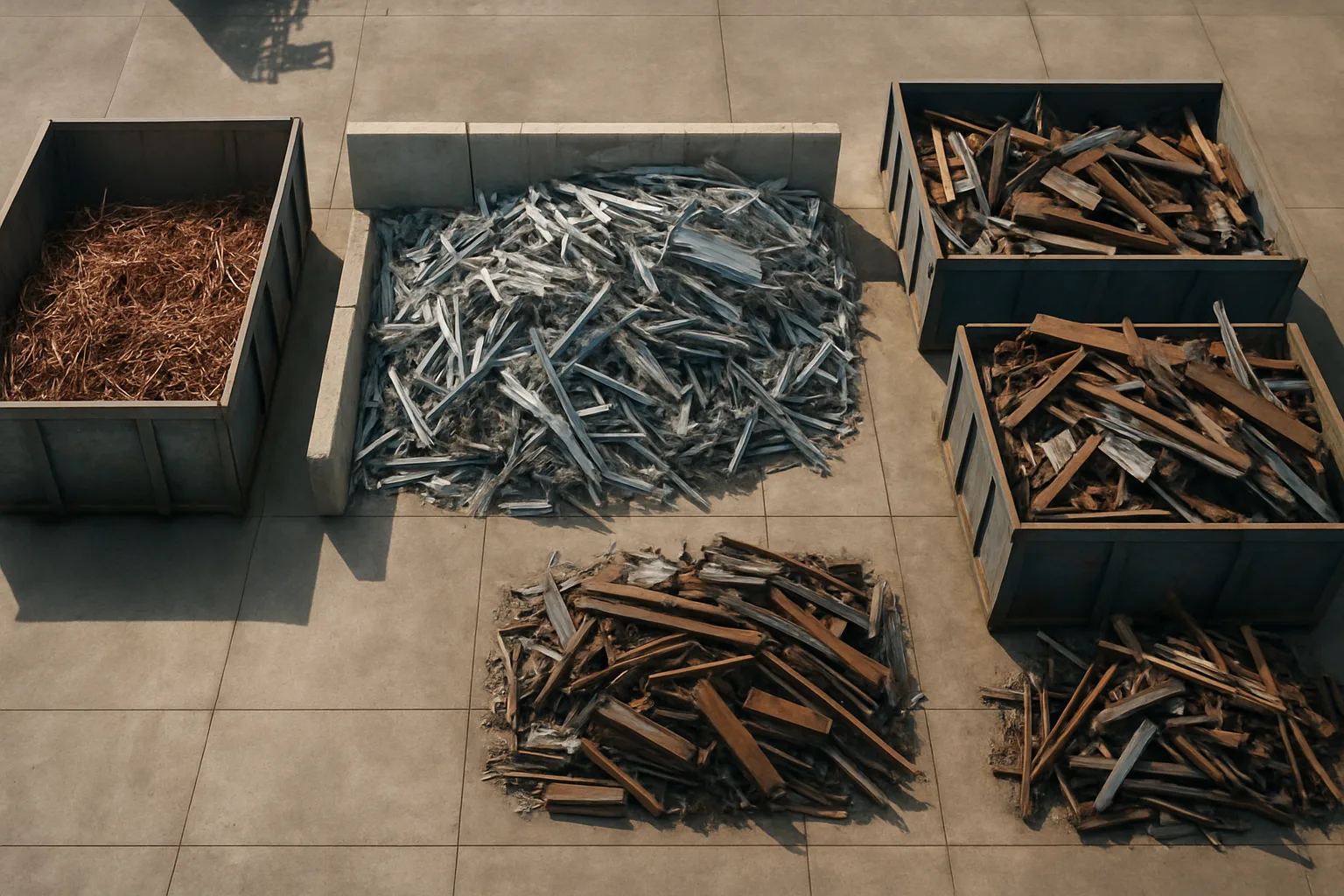
Beyond vehicles, the most valuable materials in a standard residential scrap pick up are non-ferrous metals — metals that don't contain iron and don't stick to a magnet. These consistently command higher prices per pound than steel or cast iron. Here's what we see most often:
- Copper pipe and wire: The highest-value common scrap metal by weight. Renovation projects, old plumbing, and electrical wire are all sources. Even insulated copper wire has value, though bare bright copper commands the best rate.
- Aluminum: Window frames, screen doors, lawn furniture, rims, and old storm windows. Not as valuable per pound as copper, but it adds up fast — especially if you're clearing out a garage or doing a full property cleanout.
- Brass: Faucets, valves, fittings, and old plumbing fixtures. Often overlooked, but brass is consistently priced above aluminum.
- Stainless steel: Appliances, kitchen sinks, outdoor grills. Not all stainless is equal — grade affects price, and contamination (painted surfaces, attached plastic) reduces value.
- Lead: Old wheel weights, plumbing solder, and legacy pipe. Lead requires proper handling and disposal protocols — mention it during booking so we can plan accordingly.
If you're doing a full garage or shed cleanout, sorting your non-ferrous from your steel before pick up helps. Commingled loads are still accepted for scrap metal pick up in Manitoba, but sorted material gives you a cleaner transaction and often a better return on the high-value pieces.
Appliances and Ferrous Metal: Lower Price Per Pound, Still Worth Moving
Steel and cast iron move at lower prices per pound than copper or aluminum. But in a residential cleanout, you're often dealing with bulk — refrigerators, washers, dryers, water heaters, furnaces, and old BBQ grills. At commercial volumes, ferrous metal adds up.
A standard washer or dryer weighs roughly 150–200 lbs. A chest freezer can hit 250 lbs. An older oil furnace can exceed 400 lbs of mixed steel and cast iron. When you stack several of these together in one pick up, the total weight becomes significant — and that's when free scrap metal pick up in Winnipeg for qualifying loads makes financial sense for everyone involved.
A few things to know about appliance scrap:
- Fridges and freezers contain refrigerant that must be properly evacuated — confirm this has been done, or flag it during booking.
- Appliances with compressors (fridges, A/C units) may require an additional step before they can be processed.
- Dryers are often primarily steel and worth less per pound than the non-ferrous items in the same load.
- Stainless steel appliances (dishwashers, ranges) have a modest premium over standard steel.
If you're dealing with a single appliance, a small pickup fee may apply — drop-off is often the more practical option for one-item loads. For multiple appliances, a full garage cleanout, or mixed loads with vehicles, qualifying for free pick up is realistic. Schedule your scrap metal pick up in Winnipeg and we'll assess your load upfront.
How Scrap Metal Gets Priced: What You Should Understand Before You Call
Scrap metal pricing isn't arbitrary, but it's also not static. Every metal category tracks against global commodity markets — the London Metal Exchange, COMEX, and precious metal spot prices all feed into what a yard will pay on any given day. Residential sellers often don't realize how much day-to-day price movement affects their transaction.
The practical takeaway: if you have high-value materials (copper, non-ferrous, a vehicle with a converter), timing and buyer competition both matter. A single phone call to one buyer on a slow day can result in a lowball offer — not because the yard is acting in bad faith, but because there's no competitive pressure on their end.
This is the core problem that competitive auction platforms address. When your catalytic converter or non-ferrous load goes to multiple vetted buyers simultaneously, the price reflects actual market demand — not one person's guess. Read scrap metal pick up guides for Winnipeg to understand how the process works before you book.
Disclaimer: Metal prices fluctuate daily based on commodity markets. The general price hierarchy described here reflects typical market conditions but is not a guarantee of what any specific load will return. Always confirm current rates before finalizing your pick up.
What to Have Ready Before Your Pick Up Day
The fastest, smoothest pick ups happen when sellers are prepared. Here's what to organize in advance:
- Vehicle documentation: Title or TOD paperwork for every scrap vehicle. Manitoba Scrap Metal Act compliance is mandatory — have it ready before the truck arrives.
- Sort what you can: Separate copper, aluminum, and brass from your steel pile. Even rough sorting helps.
- Accessible placement: All items need to be outside, in an open garage, or otherwise accessible. We don't enter private homes.
- Flag problem materials: Lead, refrigerant-bearing appliances, or anything with hazardous components needs to be mentioned at booking.
- Know your approximate quantities: A rough count of appliances, weight estimate if you have one, and a description of any non-ferrous materials helps us confirm whether your load qualifies for free pick up.
Our Winnipeg scrap metal services cover the full city and surrounding communities. If you're outside the city core or in a surrounding Manitoba municipality, reach out — we can often accommodate larger loads and farm or commercial cleanouts throughout the region.
Frequently Asked Questions
Q: How does junk car removal in Winnipeg work with the Manitoba Scrap Metal Act?
Under the Manitoba Scrap Metal Act, any scrap vehicle pick up requires the seller to provide either a vehicle title or Transfer on Death (TOD) documentation. This applies regardless of the vehicle's condition or age. Without proper paperwork, the pick up cannot proceed. Have your documents ready before booking — it's the single biggest source of delays on pick up day.
Q: Can I get cash for scrap cars in Winnipeg on the same day I call?
Same-day or next-day pick up is sometimes possible depending on load volume and routing, but it's not guaranteed. The most accurate timeline depends on your location, documentation readiness, and current scheduling. Booking in advance gives you more flexibility and allows time to confirm your vehicle paperwork is in order before the truck arrives.
Q: What's the most valuable thing in a junk car besides the steel?
Almost always the catalytic converter. Depending on the year, make, and model, the converter can contain meaningful quantities of platinum, palladium, and rhodium — all of which are priced significantly higher per ounce than the steel in the rest of the vehicle. A competitive auction process for the converter, like what SMASH uses, ensures that value is properly captured rather than estimated conservatively by a single buyer.
Q: Is scrap metal pick up really free in Winnipeg?
Free pick up applies to qualifying loads — typically bulk scrap, multiple vehicles, trade volumes of non-ferrous material, or commercial quantities. A single appliance or small load may carry a pick up fee, in which case drop-off is usually the better option. Describe your load when you book and we'll give you a straight answer on whether it qualifies.
Q: What non-ferrous metals are most commonly found in residential garage cleanouts?
Copper pipe and wire are the most common and highest-value finds. Aluminum from windows, rims, and furniture is the next most frequent. Brass from plumbing fixtures and valves rounds out the top three. Even small quantities of these materials add up — especially in older Winnipeg homes where copper plumbing and original aluminum window frames are still common.
If you're sitting on a junk vehicle, a pile of appliances, or years of accumulated metal from a renovation or property cleanout, don't let it sit another season. Book your free scrap pick up through SMASH Recycling — free for qualifying loads in Winnipeg and Manitoba, fully Manitoba Scrap Metal Act compliant. Call 1-855-SMASH-74 or visit scrap-metal-pick-up.ca to get started. The metal in your driveway has a price. You just need the right buyers in the room to find it.
Follow SMASH on LinkedIn for scrap metal market updates, industry news, and pricing insights: linkedin.com/company/scrap-metal-auction-sales-hub.