What's Actually Sitting in Your Garage Right Now — and What It's Worth in 2026
Most Winnipeg homeowners have no idea they're storing hundreds of dollars in scrap metal. Old appliances, dead vehicles, copper wire from a renovation, aluminum from a torn-down shed — it adds up fast. If your garage or backyard is starting to look like a holding yard, August 2026 is a solid time to clear it out and turn that clutter into cash.
This isn't about pennies for pop cans. We're talking about junk car removal Winnipeg rates, bulk non-ferrous prices, and the real weight behind common household scrap. When you know what you have and how to move it, a cleanout stops being a chore and starts being a payday.
Let's break down what's worth pulling out, what it's worth in today's market, and how to get it off your property without paying through the nose for removal.
What You're Likely Sitting On — Common Garage and Shed Scrap
Before you rent a bin or call a junk hauler, walk through your garage and shed with a different lens. Most of what looks like garbage is actually a commodity. Scrap metal is categorized by type and grade, and the difference between knowing your material and guessing can mean real money left on the table.
Here's what typically shows up in a Winnipeg garage cleanout:
- Old appliances: Washing machines, dryers, freezers, and water heaters are mostly steel. A standard washing machine runs 55 to 90 kg. At current steel prices, that's a meaningful return — especially in bulk.
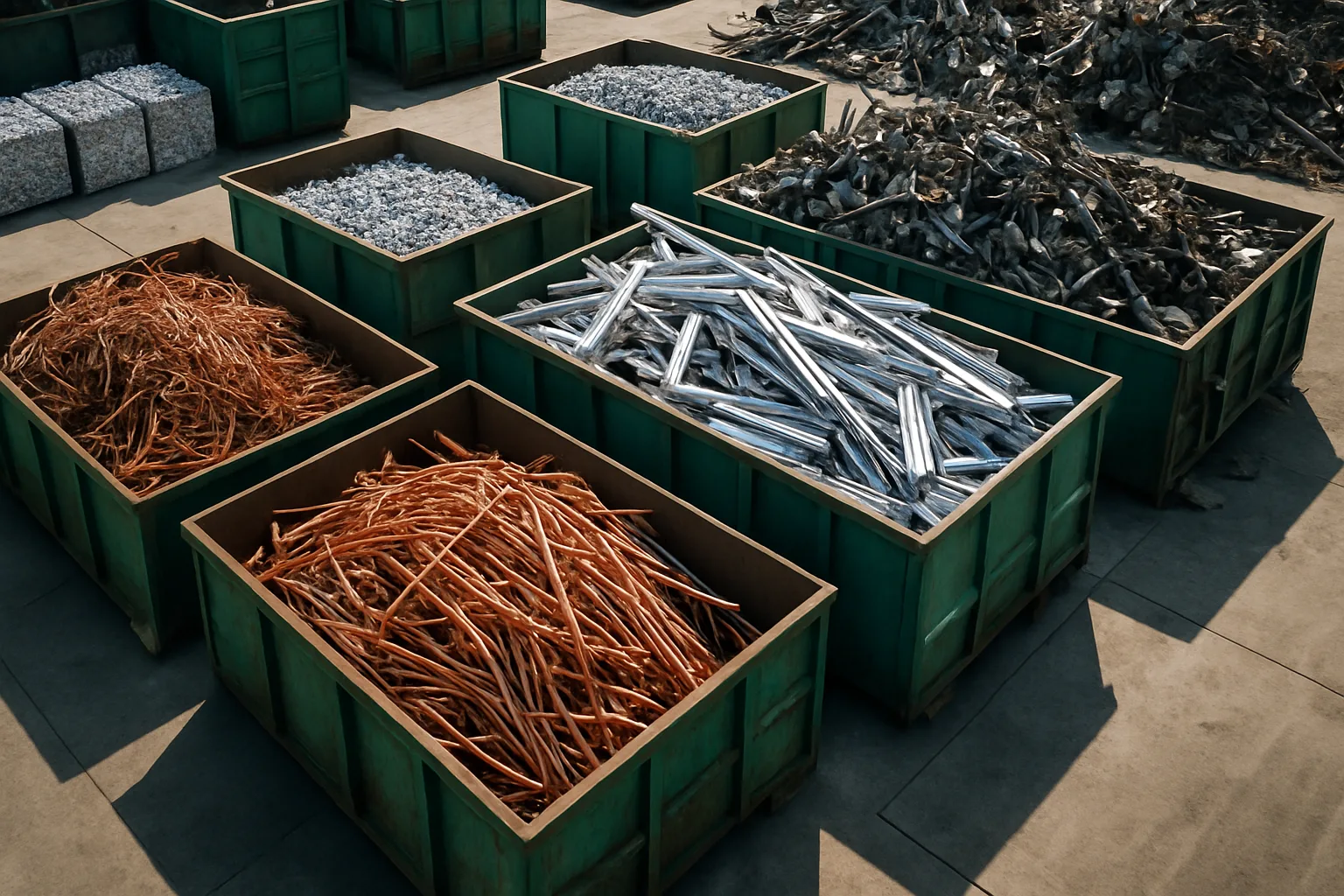
- Non-ferrous metals: Copper pipe from old plumbing, aluminum window frames, brass fittings, and electrical wire. These are the high-value items. Copper is consistently one of the best-returning metals in any yard.
- Scrap vehicles: A dead car sitting in the driveway, a snowmobile that hasn't run since 2019, a trailer with a blown axle. These are bulk steel with potential catalytic converters and non-ferrous components worth separating.
- Steel and iron: Old rims, engine blocks, farm implements, barbecue frames, fencing. Dense, heavy, and accepted at virtually every yard.
- Electronics and motors: Electric motors from tools and appliances contain copper windings. Don't throw them in the bin — they fetch a premium over bare steel.
- Catalytic converters: If you're pulling a vehicle apart or have old cats on the shelf, these deserve separate attention. More on that below.
The key rule: separate your metals before pick up. Mixed loads return less because the yard has to do the sorting. Copper alone, aluminum alone, steel alone — that's how you maximize what you're paid.
Junk Car Removal in Winnipeg — What the Process Actually Looks Like
A dead car is the most common high-value item sitting in a Winnipeg driveway. And junk car removal in Winnipeg is more straightforward than most people think — as long as you have your paperwork in order.
Under the Manitoba Scrap Metal Act, any scrap vehicle picked up or purchased must be accompanied by proper documentation. That means a clear title in your name, or a Transfer on Death (TOD) document. This is non-negotiable — no legitimate recycler will take a vehicle without it. If you've lost your title, contact Manitoba Public Insurance (MPI) before booking a pick up.
Here's the general flow for scrap car pick up in Winnipeg:
- Confirm your documentation. Title or TOD, with your name on it. No title, no pick up.
- Describe the vehicle accurately. Year, make, model, condition, whether it runs or rolls. This affects the quote.
- Get a firm quote. Not a "we'll see when we get there" estimate — a real number based on current steel prices and any recoverable components.
- Schedule pick up. Vehicles must be accessible — in the driveway, at the curb, or in a garage with enough clearance to get a tow truck in.
- Hand over keys and documentation at pick up. Clean deal, documented properly.
For Winnipeg scrap metal services, qualifying vehicle loads — especially multiple vehicles or a combination of vehicles plus bulk scrap — often qualify for free pick up. Single vehicles may incur a small removal fee depending on location and access. Always confirm when you book.
If you're unsure where to start, you can schedule your scrap metal pick up in Winnipeg directly and get a clear answer on what qualifies.
Catalytic Converter Value in 2026 — Don't Leave This on the Table
Catalytic converters are the most misunderstood high-value item in scrap. Most people either don't know they're valuable or dramatically underestimate what they're worth. In 2026, platinum group metal (PGM) prices remain volatile but strong — and the difference between selling a cat blindly versus putting it into a catalytic converter auction can be significant.
Here's what drives cat value:
- PGM content: Platinum, palladium, and rhodium are extracted from the ceramic substrate. Content varies widely by vehicle make, model, and year.
- Condition of the substrate: Cracked or blown substrates return less. Intact substrates are worth more.
- Identification: Cats are identified by serial number stamped on the shell. This determines exact PGM content — which is why platforms like SMASH use serial tracking and photo documentation to get accurate pricing before the load ever sells.
If you have a vehicle going to scrap and it still has its cat, confirm whether it's being assessed separately. A legitimate buyer will account for it. If you have loose cats from previous vehicles or shop inventory, those deserve their own valuation — not a lumped-in steel price.
SMASH handles catalytic converter loads specifically because they require documentation, photo evidence, and buyer competition to get an accurate price. A single buyer quoting you over the phone on a cat is guessing. An auction isn't.
Scrap Metal Prices in Manitoba — What to Expect Right Now
Scrap metal prices move with global commodity markets, and August 2026 is no exception. Before booking a cleanout, it helps to know roughly what you're working with — even if final prices depend on the yard and the day.
Disclaimer: All scrap metal prices fluctuate based on market conditions. The ranges below are general indicators only. Always confirm current rates with your recycler before committing to a sale.
General price ranges (CAD per pound or kg, as of mid-2026):
- Bare bright copper: Among the highest-returning metals. Strip your wire before drop-off if possible.
- Insulated copper wire: Returns less than bare bright due to the weight of insulation. Stripping pays.
- Aluminum (clean): Rims, extrusions, and sheet aluminum return well. Painted or mixed aluminum returns less.
- Stainless steel: Higher than regular steel — worth sorting separately.
- Light iron / steel: The base commodity. Appliances, frames, and body panels all fall here.
- Lead: Batteries, wheel weights, and pipe. Always declare this upfront.
The best way to understand what your specific load is worth in the current Manitoba market is to document it properly — weights, types, photos — and let buyers compete. That's exactly how platforms like schedule scrap metal pick up through SMASH operate. Competition reveals the market. One buyer guessing doesn't.
For more context on what to expect from a Winnipeg cleanout, read scrap metal pick up guides for Winnipeg to understand how loads are assessed and what affects your final return.
How to Maximize Your Garage Cleanout — Practical Steps Before Pick Up
A little prep before pick up day translates directly into better returns. You don't need to run a full yard operation — but some basic sorting and documentation makes a real difference.
Here's how to set yourself up properly:
- Sort by metal type. Copper in one pile, aluminum in another, steel in another. Mixed loads are priced as the lowest-value metal in the mix.
- Strip wire if you can. Bare copper wire returns significantly more than insulated wire. A wire stripper is a $30 tool that pays for itself fast.
- Pull non-ferrous from appliances where accessible. Copper coils from a fridge or AC unit, aluminum fins from a condenser — these add up.
- Document vehicle components. If a vehicle has a catalytic converter, take photos and note the serial number. Same for batteries, copper wiring harnesses, and aluminum wheels.
- Confirm your scrap car title is in order. Do this before you book pick up, not on the day.
- Make everything accessible. Items need to be outside, at curb, in a garage with clear access, or on accessible property. We do not enter private homes.
- Estimate your volume. A rough weight or count of items helps get you an accurate pick up quote upfront.
For scrap metal pick up in Winnipeg and Manitoba, qualifying loads — think multiple appliances, bulk non-ferrous, or a combination of scrap vehicles and mixed metals — typically qualify for free removal. Single light items may need to be dropped off or may have a small fee. Ask when you book.
Frequently Asked Questions
Q: What do I need to hand over a scrap car for junk car removal in Winnipeg?
You need either a clear vehicle title in your name or a Transfer on Death (TOD) document, as required under the Manitoba Scrap Metal Act. No title means no legal pick up — it's that simple. If you've lost your title, contact Manitoba Public Insurance (MPI) to get a replacement before scheduling removal.
Q: Is scrap metal pick up in Winnipeg always free?
Pick up is free for qualifying loads — bulk scrap, multiple vehicles, commercial volumes of non-ferrous, or large garage cleanouts. Smaller loads like a single appliance may have a pick up fee, and drop-off at a nearby yard may be the better option. Always confirm when you book so there are no surprises.
Q: Can I get cash for scrap cars in Winnipeg even if the vehicle doesn't run?
Yes. A non-running vehicle still has value in bulk steel, non-ferrous components, and potentially the catalytic converter. You'll need to confirm the vehicle is accessible — our trucks need clearance to load it safely. As long as documentation is in order, a non-runner qualifies for pick up.
Q: How do I know if my catalytic converter is worth selling separately?
Almost every cat is worth assessing separately rather than selling as part of a bulk steel load. The serial number on the shell identifies the PGM content. Platforms like SMASH use serial tracking and photo documentation to value cats accurately and put them in front of competitive buyers — which consistently beats a flat offer from a single buyer.
Q: How long does a garage cleanout pick up typically take to schedule in Manitoba?
Scheduling typically takes one to two business days once you've confirmed your load details and documentation. Large commercial cleanouts or farm equipment loads may require a site visit or additional lead time. Contact us early in the week for same-week availability in the Winnipeg area.
If your garage has been doubling as a storage unit for dead appliances, old vehicles, and scrap you've been meaning to deal with — August is the right time to move. Scrap metal pick up in Winnipeg and Manitoba is free for qualifying loads, and every load we handle is fully Manitoba Scrap Metal Act compliant. Don't let recoverable metal sit and rust when it can be working for you instead. Call 1-855-SMASH-74 or visit scrap-metal-pick-up.ca to get started.
Follow SMASH on LinkedIn for scrap metal market updates, price trends, and industry insights that help you sell smarter — whether you're clearing out a garage or moving commercial volumes.