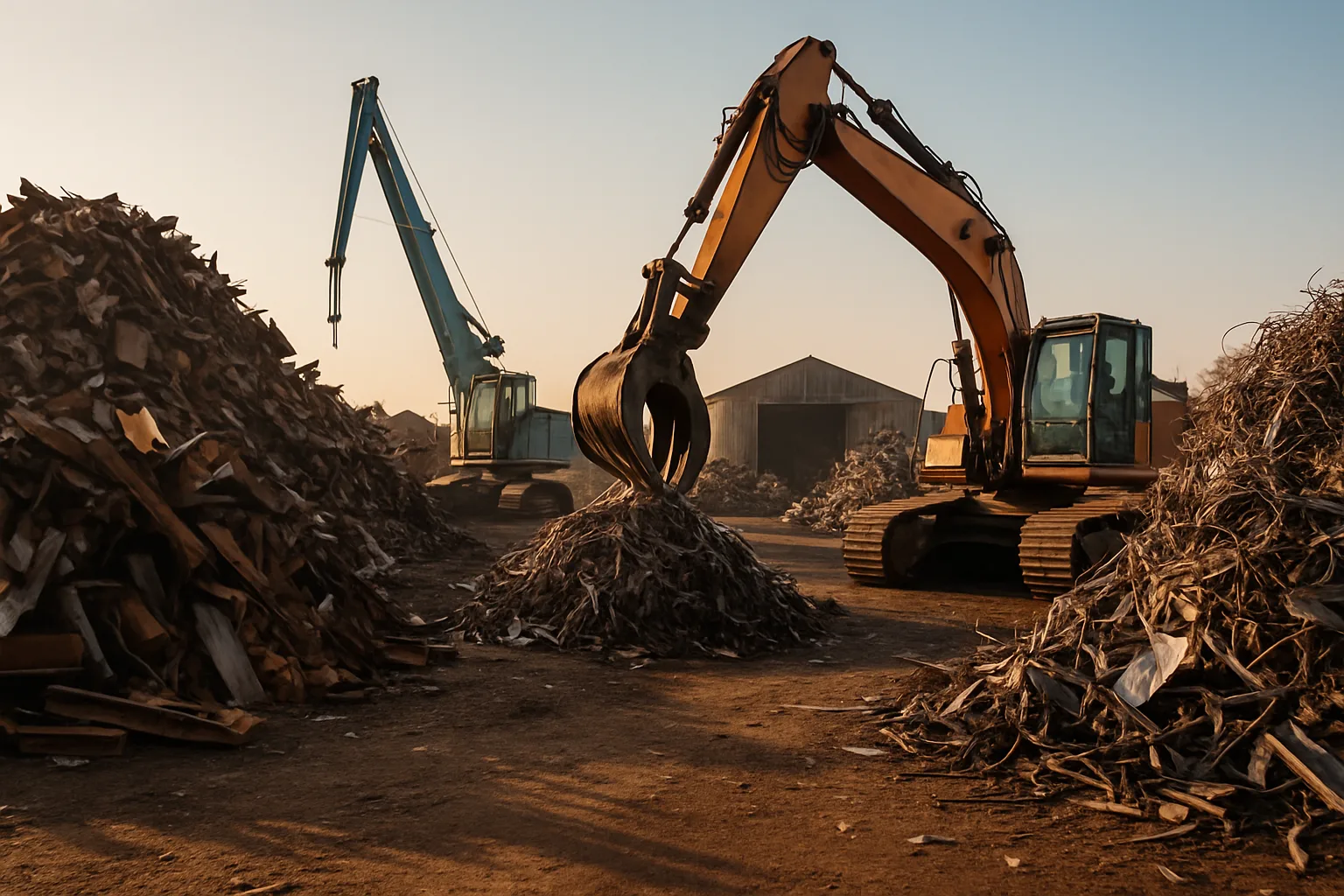
When scrap metal prices drop sharply, the first thing many recyclers quietly cut back on is free pick up. That's not a coincidence — it's simple math. Understanding how commodity prices connect to farm scrap pick up Winnipeg services can save you a frustrating phone call and help you time your cleanout right.
This is a practical breakdown of how the scrap market actually works, why price swings affect service availability, and what a Winnipeg farm operation did to navigate it — with some help from SMASH.
Why Scrap Metal Prices Drive Pick Up Decisions
Pick up isn't free because recyclers are generous. It's free when the value of your scrap covers the cost of the truck, the driver, the fuel, and the processing time — and still leaves margin. When steel prices are strong and copper is moving, a yard can absorb the cost of reaching a farm 40 kilometers outside the city. When prices soften, that math flips fast.
In Manitoba, scrap metal prices today fluctuate with global steel and non-ferrous markets. Pig iron benchmarks, Chinese demand signals, and North American automotive production rates all feed into what a Winnipeg recycler pays at the gate — and whether they'll send a truck to your property. A $20-per-tonne swing in shredder steel can be the difference between "yes, we'll pick it up" and "you'll need to haul it to us."
Key factors that affect pick up service availability in and around Winnipeg:
- Distance from the yard — Farms farther from the city face higher transport costs, so they feel price drops harder
- Load volume — A half-ton of miscellaneous iron is marginal; a full trailer of farm equipment frames is a different conversation
- Material mix — Non-ferrous (copper, aluminum, brass) adds value fast; straight iron and steel loads are thinner margin
- Market timing — Recyclers hedge against price volatility; booking during a strong market matters
This is why free scrap metal pick up in Winnipeg and Manitoba is always described as available for qualifying loads — because the qualification isn't bureaucratic gatekeeping. It reflects real economics.
A Winnipeg-Area Farm Case Study: Getting the Timing Right
In the spring of 2026, a mixed-grain and cattle operation southeast of Winnipeg had accumulated a significant pile of farm scrap over the previous decade. We're talking about a 1978 tractor that hadn't moved in years, three scrap vehicles in various states of disassembly, two old grain augers, a pile of steel fencing, and assorted implement parts. Easily 8–10 tonnes of material, maybe more once they pulled the old feed bins apart.
The operation's manager had tried to book pick up twice in previous years. Both times, she'd gotten a soft "maybe later" from local yards — politely declined because the load didn't pencil out during softer markets. By spring 2026, steel prices had recovered enough to make farm scrap pick up viable again for rural Manitoba loads. But she didn't know that. She assumed she'd get the same runaround.
Instead, she reached out through book your free scrap pick up through SMASH Recycling. SMASH assessed the load — material types, rough weights, location — and confirmed it qualified for free farm pick up. The non-ferrous mixed in (copper wiring from the old tractor, aluminum from the auger housings) helped the economics significantly. The scrap vehicles required title documentation under the Manitoba Scrap Metal Act, which the operation had in order for two of the three cars. The third needed a Transfer on Death (TOD) declaration, which the team walked them through before the pick up date.
Pick up was completed in a single visit. The farm cleared over a decade of accumulated scrap in one shot — no hauling fees, no multiple trips, no sorting everything themselves in advance.
How Scrap Car Pick Up Winnipeg Works When Prices Shift
Scrap car pick up in Winnipeg is a specific service with its own economics. A scrapped vehicle isn't just iron — it's also copper wiring, aluminum components, fluids that need proper handling, and potentially a catalytic converter worth more than the body steel. That material mix means vehicle pick up is often viable even when flat steel prices are soft, because the whole-vehicle value is more complex than straight tonnage.
That said, certain market conditions still affect availability and what you're offered. If catalytic converter commodity prices are weak, if aluminum prices have dipped, or if there's a regional glut of scrap vehicles, the economics shift. Some yards respond by pausing free pick up for single vehicles and only moving on multi-vehicle loads.
For Manitoba farm operations, this often works in your favour. A farm with three or four scrap vehicles plus iron is a much stronger pick up candidate than a single derelict car in a Winnipeg back alley. Volume and material diversity both work for you.
Manitoba Scrap Metal Act compliance is non-negotiable for vehicles. Every scrap car requires either a clear title or a Transfer on Death (TOD) document. No exceptions. If you've got vehicles sitting on the farm without paperwork, sort that out before you book — it will delay or cancel the pick up. For guidance on documentation, read scrap metal pick up guides for Winnipeg to understand what you need before you call.
Appliance and Farm Equipment Pick Up: What Qualifies and What Doesn't
Not every pick up request fits the qualifying load threshold. A single old fridge sitting in a garage? That's borderline — depending on current appliance scrap values and your location relative to the yard, there may be a small pick up fee, or you may be better off dropping it at a local recycler. Small appliance loads almost always work better as drop-offs. This applies whether you're in the city or out in rural Manitoba.
Farm equipment is a different story. Old combines, disassembled tractors, grain augers, steel fuel tanks (drained and cleaned), fencing, steel bins, and implement frames — this is the kind of material that makes a farm scrap pick up worthwhile for everyone. It's heavy, it's dense, and it adds up fast.
For the operations that do qualify, Winnipeg scrap metal services include pick up coordination that handles bulk farm loads efficiently — usually a flatbed or roll-off depending on the material and site access. We do not enter private homes or enclosed structures. Items need to be accessible from the yard, driveway, or field edge.
What typically qualifies for free farm pick up in Manitoba:
- Multiple scrap vehicles (with title or TOD documentation in hand)
- Farm implement frames, tractor bodies, combines
- Steel grain bins, fuel tanks (empty and degassed), steel fencing
- Bulk non-ferrous — copper wiring, aluminum, brass fittings in trade quantity
- Contractor/commercial volumes of structural steel
What typically does NOT qualify for free pick up:
- Single appliances without other accompanying scrap
- Small mixed loads under a certain threshold
- Material that requires significant disassembly on our end
- Items inside enclosed buildings we can't access safely
How SMASH Helps You Navigate a Volatile Market
The frustrating part of the old approach — calling a single local yard, getting a vague answer, not knowing if the price offered is fair — is exactly what SMASH was built to fix. For sellers with significant volumes of scrap metal, SMASH's auction platform brings vetted buyers into competition, which creates better price discovery than a single phone call ever will.
For farm operations specifically, this matters. A yard might offer you a flat per-tonne rate on your farm scrap. But if your material mix includes non-ferrous, quality steel, and recoverable parts, the real market value could be meaningfully higher. Competition reveals that. More buyers means better price discovery — and that principle applies whether you're selling a single load or planning a multi-phase farm cleanout across several seasons.
SMASH also handles the documentation and logistics complexity that makes large farm scrap sales difficult to manage alone. Photo documentation of the load, inventory tracking, compliant invoicing — these aren't just conveniences. They're what makes it possible to schedule your scrap metal pick up in Winnipeg with confidence that the process will be handled properly from first contact to final settlement.
Platforms like SMASH make it easy to connect farm operations with buyers who are actively looking for the material you have — without guessing at the market or accepting the first number you're given.
Timing Your Farm Scrap Pick Up in Winnipeg
Spring and early summer are historically strong windows for farm scrap pick up in Manitoba. Fields are accessible after break-up, yards aren't buried in snow, and steel markets tend to be active heading into construction season. If you've been waiting for the right time to clear out accumulated farm scrap, mid-2026 is a reasonable window to make the call.
That said, don't hold off indefinitely trying to time the market perfectly. If you have a qualifying load — multiple vehicles, significant iron, non-ferrous mixed in — reach out now. The cost of waiting another season is measured in storage space, safety hazards, and the risk that prices soften again before you act.
Free scrap metal pick up for qualifying loads in Winnipeg and Manitoba is available now. If you've been sitting on a decade of farm scrap like the operation in our case study, this is the window to move. Manitoba Scrap Metal Act compliant, no subscription fees, and no runaround on documentation — call 1-855-SMASH-74 or visit scrap-metal-pick-up.ca to get the conversation started.
Frequently Asked Questions
Q: Does farm scrap pick up in Winnipeg cost anything?
Free pick up is available for qualifying loads — typically bulk farm scrap including multiple vehicles, equipment frames, steel bins, and significant non-ferrous material. Small or single-item loads may involve a pick up fee, and drop-off is often the better option for those. The qualification depends on your material type, volume, and distance from the yard.
Q: How do scrap metal prices today affect whether my farm load qualifies for free pick up?
Directly. When steel and non-ferrous commodity prices are strong, recyclers can absorb the transport cost of rural pick ups and still operate profitably. When markets soften, the threshold for a qualifying load effectively rises. Loads with non-ferrous mixed in — copper wiring, aluminum — tend to remain viable even in softer markets because the material value is higher per kilogram.
Q: What documents do I need for scrap car pick up in Winnipeg?
Under the Manitoba Scrap Metal Act, every scrap vehicle requires either a clear title in your name or a Transfer on Death (TOD) declaration. This is a legal requirement — not a yard policy — and applies to all vehicles regardless of condition. Have your documentation ready before you book pick up to avoid delays.
Q: Can I get free appliance removal in Winnipeg as part of a farm cleanout?
Appliances mixed into a larger farm scrap load often qualify when the overall load meets the threshold. A single appliance on its own is less likely to qualify for free pick up — drop-off at a local recycler is usually the more practical option for single items. If you're clearing a full property or farm yard, mention every category of material when you call so the pick up can be assessed as a whole.
Q: How far outside Winnipeg does scrap pick up service reach in Manitoba?
Service reach depends on the load — larger, heavier loads with strong material mix justify longer drives from the yard. Farm operations in rural Manitoba with significant volumes of iron, multiple vehicles, and non-ferrous should call regardless of distance. The assessment is based on whether the economics of the full load support the trip, not a fixed kilometre boundary.
Stay current on scrap metal market conditions, pick up service updates, and recycling industry news by following SMASH on LinkedIn: linkedin.com/company/scrap-metal-auction-sales-hub.