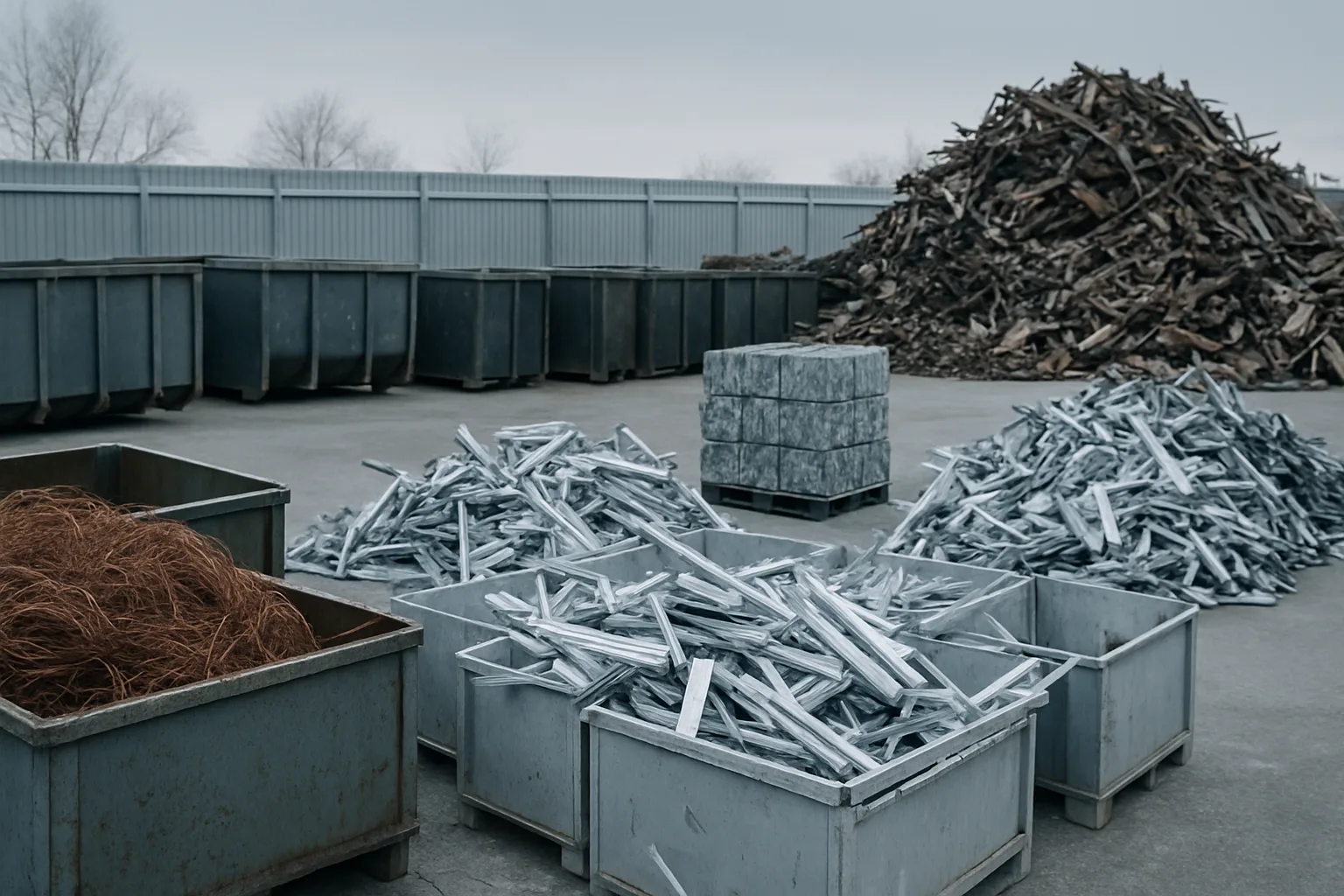
When an Estate Becomes a Metal Mountain: What One Winnipeg Family Learned About Scrap Removal
The average estate cleanout generates more recyclable metal than most families expect — often several thousand pounds of steel, copper, aluminum, and end-of-life vehicles sitting on a single property. When a Winnipeg family contacted us after their father passed away in the spring of 2026, they were dealing with exactly that. Three decades of accumulated scrap, two non-running vehicles, a barn full of old farm equipment parts, and a basement stacked with appliances that hadn't worked since the early 2000s. They had no idea where to start.
This is a story about how that cleanout went, what we learned from it, and what you should know if you're facing something similar. Whether you're an executor, a family member, or a property manager dealing with a cluttered estate in Winnipeg or anywhere in Manitoba, the process is more straightforward than it looks — if you approach it the right way.
What We Found: A Typical Estate Scrap Inventory
The property was a residential lot in the north end of Winnipeg with a detached garage and a storage shed. The family had already done a first pass to remove personal belongings, furniture, and anything with sentimental value. What remained was entirely metal, mechanical, or otherwise recyclable. Here's a rough breakdown of what was on site:
- Two scrap vehicles: A mid-2000s pickup truck with a seized engine and a late-1990s sedan with extensive rust damage and no title in hand — more on that in a moment.
- Large appliances: Two refrigerators, a chest freezer, a gas range, a washer, and a dryer. All non-functional, all past reasonable repair.
- Structural scrap: A disassembled metal shelving system, old cast iron radiators, steel pipes from a basement renovation, and a pile of miscellaneous steel fittings.
- Non-ferrous material: Copper pipe pulled from the old heating system, aluminum window frames, and a small collection of brass valves and fittings.
- Automotive parts: Stacked rims, a scrap transmission, battery cores, and a catalytic converter that had been removed but stored.
In total, the load represented a significant volume of mixed scrap metal. The family had originally assumed they'd need to hire a junk removal company and pay out of pocket. That's not how this ended up working.
The Vehicle Documentation Problem — And Why It Matters
Here's where a lot of estate cleanouts hit a wall: the scrap vehicles. Both vehicles on this property needed to be assessed under the Manitoba Scrap Metal Act, which governs how scrap vehicles are handled, transferred, and documented in the province. This isn't optional. Winnipeg scrap metal services that operate compliantly will not accept a vehicle without proper title or Transfer on Death (TOD) documentation. No exceptions.
The pickup truck had a title in the glove box — straightforward. The sedan was the problem. The deceased owner had purchased it privately years earlier and the title had never been transferred into his name. The family had to work through the estate executor and Manitoba Public Insurance to establish documentation before the vehicle could legally move. This process took approximately two weeks. It was frustrating, but it was necessary.
If you're managing an estate and you know there are vehicles on the property, get ahead of the documentation before you book a pickup. Check the glove box, the filing cabinet, anywhere paperwork might be stored. If you can't locate a title, contact MPI early. The sooner you start that process, the sooner your scrap car removal in Winnipeg can actually happen.
Once documentation was confirmed for both vehicles, the removal was scheduled and completed in a single trip. The vehicles were processed through compliant channels, and the family received the appropriate paperwork for their records.
How SMASH Helped the Family Understand What Their Scrap Was Worth
One of the biggest sources of stress for this family wasn't the physical work of the cleanout — it was the uncertainty. They didn't know what their scrap was worth. They'd heard wildly different numbers from different sources. A neighbor mentioned copper was "through the roof." Someone else told them their catalytic converter was basically worthless. Neither claim was based on anything solid.
This is exactly the kind of situation where a platform like SMASH changes the dynamic. Rather than calling one buyer and accepting whatever number they offer, SMASH connects sellers with a network of vetted buyers who compete for your material. That competition — not a single opinion from a single buyer — is what reveals what your scrap is actually worth on the open market. More buyers means better price discovery. That's not a promise of higher prices; it's how competitive markets work.
The family's non-ferrous material — the copper pipe, aluminum frames, brass fittings, and catalytic converter — was documented with photos, weights, and descriptions before the pickup. That documentation gave buyers confidence in what they were bidding on. Documented inventory helps. Book your free scrap pick up through SMASH Recycling and see how the process works before committing to anything.
For bulk scrap metal like this estate cleanout — multiple vehicles, significant non-ferrous volume, and a mix of appliances and structural steel — this qualifies as a load where scrap metal pick up in Winnipeg and Manitoba can be arranged at no charge. Smaller loads, a single appliance, or one-off items may involve a fee or may be better handled by dropping material off at a yard directly.
Appliances, Steel, and the Stuff Nobody Thinks About
Large appliances are one of the most overlooked sources of scrap value in an estate cleanout. A standard refrigerator contains steel casing, aluminum evaporator coils, copper refrigerant lines, and a compressor. A gas range is mostly steel with some aluminum components. None of these items should go to a landfill, and most of them have legitimate scrap value — especially when you're pulling multiple units at once.
The appliances in this cleanout — two fridges, a freezer, a range, and a washer-dryer set — were removed as part of the same load. Refrigerators and freezers require refrigerant removal before processing, which is handled properly by licensed processors. Don't let anyone tell you the refrigerant handling disqualifies the appliance from having scrap value — it's a cost of processing, but the material value is still there.
The cast iron radiators deserve a special mention. Cast iron is dense, heavy, and has solid scrap value per pound. Old radiators from Winnipeg homes — common in properties built before the 1970s — can add meaningful weight to a load. If you're doing an estate cleanout and you see old radiators, don't let anyone haul them for free without acknowledging their value. Those are worth documenting and weighing.
For more practical guides on what to expect during the removal process, read scrap metal pick up guides for Winnipeg and see how different material types are typically handled.
What Scrap Metal Prices Looked Like for This Load in 2026
We won't invent numbers here — scrap metal prices fluctuate based on global commodity markets, local demand, and material condition. What we can tell you is that in 2026, non-ferrous metals — particularly copper and aluminum — continue to carry meaningfully higher value per pound than ferrous (steel and iron) scrap. The copper pipe pulled from this property's heating system was the highest-value item by weight after the vehicles.
For ferrous scrap — the steel shelving, pipes, appliance bodies, and automotive components — pricing is lower per pound but volume matters. A large estate load can add up quickly when you're measuring in hundreds or thousands of pounds. The key is getting that material weighed and documented rather than estimating.
Disclaimer: Scrap metal prices fluctuate constantly based on market conditions. The values mentioned in this article are general observations. Always verify current rates directly with your buyer or through a platform like SMASH before making decisions based on price.
Lessons From This Estate Cleanout
Every estate cleanout is different. But after working through this one in Winnipeg, a few patterns stood out that apply broadly:
- Start with the vehicles. Vehicle documentation takes the longest. Don't wait until the last minute. Confirm title or TOD documentation first, before scheduling anything else.
- Separate your non-ferrous early. Copper, aluminum, and brass mixed into a general steel pile lose value. Pull them out, bag them, and label them. Buyers pay more for clean, separated material.
- Don't assume anything is worthless. Cast iron, old batteries, catalytic converters, even aluminum window frames — everything has value when it's documented properly and sold to the right buyer.
- Volume unlocks free pick up. A single appliance may not qualify for a free removal. A full estate cleanout with vehicles, appliances, and structural scrap almost certainly does. If you're not sure, describe your load when you call — that's how qualifying loads get identified.
- Work with compliant operators. Manitoba Scrap Metal Act compliance isn't bureaucratic red tape. It protects you as the seller and the estate from liability. If a buyer won't ask for documentation, that's a red flag, not a convenience.
If you're managing a property in Manitoba and you need to schedule your scrap metal pick up in Winnipeg, start the conversation early. The process moves faster than most families expect once the documentation is in order.
Frequently Asked Questions
Q: How does scrap car removal in Winnipeg work for estate vehicles without a clear title?
You'll need to establish proper documentation before any vehicle can be legally moved for scrap under the Manitoba Scrap Metal Act. If the title is missing, contact Manitoba Public Insurance (MPI) and work through the estate executor to obtain proper documentation. This process can take one to two weeks, so start it before you schedule your pickup.
Q: Is scrap vehicle pick up in Winnipeg free for estate cleanouts?
Free pick up applies to qualifying loads. A full estate cleanout with multiple vehicles, large appliances, and bulk scrap metal typically qualifies. A single non-running vehicle on its own may or may not — describe your specific load when you call to find out. We don't charge by default, but we also don't promise free service for loads that don't meet volume thresholds.
Q: What happens to old appliances picked up during an estate cleanout?
Large appliances are processed for scrap metal recovery. Refrigerators and freezers require certified refrigerant removal before processing. The steel, aluminum, copper, and other metals are separated and recycled. Nothing usable ends up in a landfill if it can be recovered as scrap.
Q: How do scrap metal prices today affect what I get for an estate load?
Prices fluctuate based on global commodity markets — copper and aluminum are particularly volatile. Competitive bidding through a platform like SMASH helps ensure you're not leaving money on the table by accepting the first number offered. Always verify current pricing before finalizing any sale. Documented, separated material consistently attracts stronger bids than unsorted mixed loads.
Q: Do I need to be present for the scrap metal pick up during an estate cleanout in Winnipeg?
Not necessarily, but someone needs to be available to confirm vehicle documentation and provide access to the property. We don't enter private homes — all material must be outside, in a garage, or otherwise accessible before pickup. If you're an out-of-town executor managing a Winnipeg property, you can coordinate access through a local contact.
If you're facing an estate cleanout in Winnipeg or anywhere in Manitoba, you don't need to figure it out alone. Free pick up is available for qualifying loads — multiple vehicles, bulk appliances, and large volumes of scrap metal. We operate in full compliance with the Manitoba Scrap Metal Act, so the documentation side is handled properly from the start. Call 1-855-SMASH-74 or visit scrap-metal-pick-up.ca to describe your load and get the process moving.
For ongoing industry updates, scrap metal market insights, and recycling news across North America, follow SMASH on LinkedIn: linkedin.com/company/scrap-metal-auction-sales-hub.